
Dr. Otávio Boaventura
Em 8 de março, foi realizada uma sessão do Paper Club, em que o artigo do Dr. Carlos Eduardo Leão - http://www.rbcp.org.br/details/1857/pt-BR/transplante-de-barba - foi apresentado e discutido pelo colega André Giannini de Belo Horizonte. Segue um resumo do trabalho que foi, em seguida, moderado pelo autor do artigo.
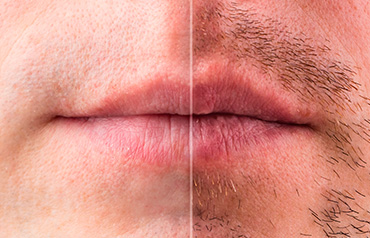
A barba é um atributo estético que marca a identidade do homem. O importante e pioneiro artigo do Dr. Carlos Eduardo Leão objetiva mostrar a importância atual e a grande evolução atingida pelas técnicas e táticas da restauração capilar para a região da barba.
A idade varia entre 23 e 64 anos. Os pacientes imberbes representam 60%; já 30% queixam-se de barba falhada e 10% procuram a cirurgia para camuflagem de cicatrizes.
O mapeamento da barba nos diferentes segmentos da face, sempre incluindo o bigode e cavanhaque, mostra que a direção do crescimento dos fios é individual.
Existe um padrão que se repete numa significativa amostragem o que facilita enormemente o planejamento e desenho da nova barba.
Na maioria das vezes, os pacientes optam pelo padrão tradicional, mais comportado, cujo traçado inferior, mais angulado, ultrapassa ligeiramente a linha da mandíbula, mantendo uma largura máxima de 6 cm até a região geniana, deixando tanto esse segmento quanto o pescoço ausentes de pelos. O traçado superior em curva ligeiramente quebrada termina na mesma altura da comissura labial, unindo aqui a lateral do bigode ao cavanhaque.
Frequentemente, é solicitado um preenchimento triangular central de base superior unindo o lábio inferior ao cavanhaque.
O autor pede exames pré-operatórios de rotina e realiza o procedimento em clínicas bem aparelhadas ou hospitais, que são a preferência, sendo a anestesia local com sedação assistida por anestesiologista. Tanto o FUT quanto o FUE podem ser utilizados.
Para Dr. Leão, o fio longo, principalmente na cirurgia da barba, é fundamental para a correta direção e angulação dos enxertos em relação à pele da face: na barba, deve ter uma inclinação de 20 graus. A densidade cosmética aceitável para uma boa restauração capilar em paciente imberbe gira em torno de 8 a 10 mil fios, numa média estimada entre 25 a 30 UFs por cm2.
Para colocação dos enxertos, a preferência do autor é pelo stick and place.
O pós-operatório imediato é simples e pelos transplantados seguem a mesma evolução daqueles destinados ao tratamento da calvície.
CONCLUSÃO: a técnica do transplante de barba cresce exponencialmente em todo o mundo. O transplante de barba é hoje uma realidade. Os pacientes geneticamente imberbes ou que têm suas barbas falhadas, ou, ainda, querem camuflar cicatrizes inestéticas da face em regiões de barba, encontram nessa cirurgia a realização de um sonho.
Folículo - Edição 25
English version
Beard transplantation
Beard transplantation
Dr. Otávio Boaventura
On March 8, a Paper Club session was held, Dr. Carlos Eduardo Leão - http://www.rbcp.org.br/details/1857/pt-BR/transplante-de-barba - was presented and discussed by colleague André Giannini from Belo Horizonte. A summary of the paper moderated by the author of the article is found in the link below.
The beard is an aesthetic attribute that marks a man's identity. The important and pioneering article by Dr. Carlos Eduardo Leão shows the current importance and the great evolution reached by the techniques and tactics of hair restoration for the beard region.
The age ranges between 23 and 64 years. The beardless patients represent 60%; 30% complain of a stubbled beard and 10% seek surgery to camouflage scars.
The mapping of the beard in the different segments of the face, always including the mustache and goatee, shows that the direction of hair growth is individual.
There is a pattern repeated in a significant sample which facilitates the planning and design of the new beard.
Most of the time, patients opt for the traditional, more well-behaved pattern, whose lower, more angled outline slightly exceeds the jaw line, maintaining a maximum width of 6 cm up to the genian region, leaving both this segment and the neck with no hair. The upper line in a slightly broken curve ends at the same height as the labial commissure, joining the side of the mustache to the goatee here.
Often, a top-based central triangular fill is requested joining the lower lip to the goatee.
The author asks for routine preoperative tests and performs the procedure in well-equipped clinics or hospitals, which are preferred, with local anesthesia with sedation assisted by an anesthesiologist. Both FUT and FUE can be used.
For Dr. Leão, long hair, especially in beard surgery, is essential for the correct direction and angulation of the grafts in relation to the skin of the face: in the beard, it must have an inclination of 20 degrees. The acceptable cosmetic density for a good hair restoration in a beardless patient is 8 to 10 thousand hairs, with an estimated average between 25 to 30 FUs per cm2.
For placement of grafts, the author prefers stick and place.
The immediate postoperative period is simple, and the transplant patients follow the same evolution as those destined for the treatment of baldness.
CONCLUSION: the beard transplantation technique grows exponentially all over the world. Beard transplantation is now a reality. Patients who are genetically beardless or who have failed beards, or who still want to camouflage unsightly scars on the face in beard regions, find in this surgery the realization of a dream.

