
Introdução
Dr. Igor Bottura
Existem diferentes tipos de técnicas de implantação, cada uma delas diferenciadas de acordo com tipo de instrumento - alguns mais antigos, como as pinças, e outros mais recentes (implanters) - e também do modo como realizamos as incisões na área receptora, antes da colocação (incisões prévias) ou simultaneamente à colocação (stick and place).
A criação dos orifícios na região receptora, seja nas incisões prévias ou na técnica stick and place, deverá ser feita exclusivamente por médico(a) cirurgião(ã), enquanto as assistentes podem participar na implantação após os orifícios serem criados utilizando pinças ou implanters cegos.
(Tabela 1)
Grande parte dos cirurgiões utiliza as incisões prévias como meio de criar os orifícios e sua vantagens está em:
- Padronização do tamanho dos orifícios com tamanho do enxertos – largura e profundidade
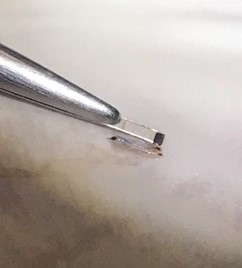
- Melhor controle de profundidade, menor dano tecidual (incisões coronais);
- Facilidade no cálculo e distribuição da densidade (UF/cm2) por regiões
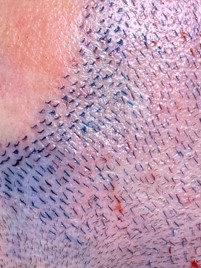
- Possibilidade de delegar a assistentes cirúrgicas.
Discussão
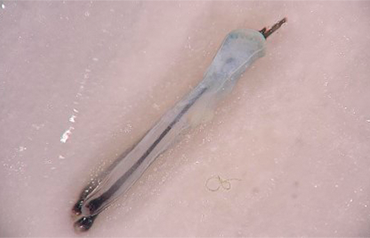
Com o advento da técnica FUE, as características dos enxertos foliculares mudaram. A unidades foliculares se tornaram mais finas, delicadas e suscetíveis a traumas, já que possuem menor quantidade de tecido conectivo e gordura.
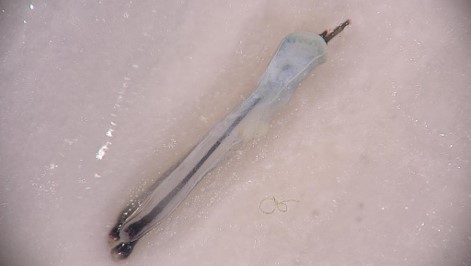
Com isso, tem-se discutido o risco de trauma nos enxertos quando se usam pinças no momento da colocação.
A seguir, apresentaremos alguns tipos de traumas que podem ocorrer durante o manuseio dos enxertos durante a implantação com pinças:
- Um dos erros no manuseios dos enxertos é o excesso de pressão aplicada ao redor das UFs https://youtu.be/Qg2UMOsh13A
- Enxertos dobrados, ou em forma de “j”, ao colocar dentro das incisões https://youtu.be/Kt71N0R-1ZA
- Repetidas tentativas em colocar o enxertos com pinça dentro das incisões é também uma de causa de trauma folicular https://youtu.be/8PT8-YNlB6w
As complicações decorrentes do trauma durante a colocação são: baixo crescimento das UFs implantadas e crescimento de folículos crespos-tortuosos na área receptora.
Uma das soluções para uma implantação segura de enxertos FUE em incisões prévias na área receptora é o uso dos implanters não afiados, a chamada técnica DNI (Dull Needle Implanters).
Essa técnica, descrita por Mauro Speranzini (2016), permitiu que os enxertos pudessem ser colocados de maneira atraumática na região receptora, e também a possibilidade de delegar a implantação para equipe de assistentes (médicos ou técnicas), permitindo que a etapa da colocação possa ser realizada com até três pessoas ao mesmo tempo https://youtube.com/shorts/4uJqCw4oLMg), o que é muito importante quando se realiza longas cirurgias, reduzindo a fadiga do cirurgião e minimizando o tempo cirúrgico.
Outra solução é o uso dos dilatadores de orifícios das incisões prévias, chamado de técnica “No Touch Bulb”, descrita pela Dra. Seema Garg. Nessa técnica, um assistente alarga as incisões com auxílio de dilatador e outro assistente empurra o enxerto para dentro das incisões no movimento vertical https://youtu.be/EuloKQTNno8). É importante que os enxertos sejam seguros pela porção superior com ajuda de uma pinça reta e o bulbo não seja tocado pela pinça, e também não pode ser dobrado ao entrar em contato com orifícios.
Conclusão
O melhor método de implantação é aquele que permite realizar a cirurgia em menor tempo cirúrgico, com menor trauma possível e com direção, profundidade e angulação corretas. Por isso é importante o cirurgião conhecer todas as opções de técnicas de colocação seguras e eficientes a serem incorporadas na sua rotina. Cada equipe deve escolher qual técnica se adapta melhor a suas necessidades. O treinamento e supervisão das assistentes cirúrgicas durante essa etapa cirúrgica são fundamentais para o sucesso de um transplante capilar.
Referências bibliográficas
- Conradin A. Does use of implanters affect the quality of FUE graft? Hair Transplant Forum Int´l.2017(27)4-68-52
- Speranzini M. Graft placement using Dull Needle Implanter (DNI) technique.Hair Transplant Forum Int´l.2017;(27),3,52-56.
- Rassman W, Pak J, Kim J (2016) Follicular Unit Extraction: Evolution of a Technology. J Transplant Technol Res 6: 158.
- Practical Guide to Hair Transplantatiom.True,Garg,Garg. 2021,, 1 ed, pg 270-272.
- Emina, K. Problematic Graft Quality and Handling. In: W.P. Unger, et al., editors. Hair Transplantation, 5th Ed. London: Informa; 2011; pp. 408-413
English version
Types of traumas during the implantation of FUE grafts with clamps on previous incisions: errors and solutions
Introduction
Dr. Igor Bottura
There are different types of implant techniques, each one of them differentiated according to the type of instrument, some are older, such as forceps, and others are more recent (implanters), and also according to the way in which we make the incisions in the recipient area, before the placement (previous incisions) or simultaneously to the placement (stick and place).
The creation of the holes in the recipient area, either in the previous incisions or in the stick and place technique, must be done exclusively by the surgeon, while the assistants can participate in the implantation after the holes are created using forceps or blind implanters.
(Table 1)
Most surgeons use previous incisions to create the holes and their advantages lie in:
- Better control of depth, less tissue damage (coronal incisions).
- Easier calculation and distribution of density (FU/cm2) by regions
- Possibility to delegate to surgical assistants.
Discussion
With the FUE technique, the characteristics of follicular grafts have changed. The follicular units became thinner, more delicate, and susceptible to trauma, since they have less connective tissue and fat (image 3). So, the risk of graft trauma when clamps are used at the time of placement has been discussed.
We will present some types of traumas that can occur during the handling of grafts during implantation with forceps:
- One of the errors in handling the grafts is the excessive pressure applied around the FUs https://youtu.be/Qg2UMOsh13A
- J-bent grafts, when placing inside the incisions https://youtu.be/Kt71N0R-1ZA
- Repeated attempts to place the grafts with forceps inside the incisions is also a cause of follicular trauma https://youtu.be/8PT8-YNlB6w
Complications resulting from trauma during placement are poor growth of the implanted FUEs and growth of hairy-tortuous follicles in the recipient area.
One of the solutions for a safe implant of FUE grafts in previous incisions in the recipient area is using unsharpened implanters, the DNI technique (Dull Needle Implanters).
Mauro Speranzini (2016) described this technique, which allowed the grafts to be placed in an atraumatic way in the recipient region, and also the possibility to delegate the implantation to a team of assistants (doctors or technicians), allowing the placement step to be performed with up to three people at the same time https://youtube.com/shorts/4uJqCw4oLMg, which is very important when performing long surgeries, reducing surgeon fatigue and minimizing surgical time.
Another solution is the use of orifice dilators from previous incisions, called the "No Touch Bulb" technique, described by Dr. Seema Garg. In this technique, an assistant widens the incisions with a dilator and another assistant pushes the graft into the incisions in a vertical movement https://youtu.be/EuloKQTNno8. It is important that the grafts are held by the upper portion with the help of straight forceps, and the bulb is not touched by the forceps, nor can it be bent when it meets orifices.
Conclusion
The best implant method is the one that allows the surgery to be performed in the shortest surgical time, with the least possible trauma, and with the correct direction, depth, and angulation. That is why it is important for the surgeon to know all the options of safe and efficient placement techniques to be included into his routine. Each team must choose which technique best suits their needs. The training and supervision of the assistants during this surgical stage are fundamental for the success of a hair transplant.
Bibliography:
- Conradin A. Does use of implanters affect the quality of FUE graft? Hair Transplant Forum Int´l.2017(27)4-68-52
- Speranzini M. Graft placement using Dull Needle Implanter (DNI) technique. Hair Transplant Forum Int´l.2017;(27),3,52-56.
- Rassman W, Pak J, Kim J (2016) Follicular Unit Extraction: Evolution of a Technology. J Transplant Technol Res 6: 158.
- Practical Guide to Hair Transplantation. True, Garg, Garg. 2021, 1 ed, pg. 270-272.
- Emina, K. Problematic Graft Quality and Handling. In: W.P. Unger, et al., editors. Hair Transplantation, 5th Ed. London: Informa; 2011; pp. 408-413

