
Revendo a Cicatriz Tricofítica
Dr. Henrique Radwanski
Os colegas da ABCRC podem questionar: por que rever um assunto que parece estar esquecido, dentro de uma gaveta chamada “Técnicas ultrapassadas”? Dentro da cirurgia da restauração capilar, lá estão o retalho temporo-parieto-occipital de Juri, os fios sintéticos, os procedimentos de redução de área glabra… Quem ainda se preocupa com uma cicatriz linear na era (quase exclusiva) do FUE? Aliás, na ABCRC, tenho certeza que muitos jamais realizaram a colheita de unidades foliculares removendo uma tira de pele.
Entretanto, é minha opinião que a técnica do fuso de pele ainda perdura, e continuará sendo indicada em determinadas situações. Alguns pacientes – normalmente acima de certa idade – não permitem raspar a cabeça e não se incomodam com uma cicatriz discreta, que nunca vai aparecer debaixo dos cabelos. Podem conhecer um paciente amigo que já fez a técnica FUSS ("follicular unit strip surgery”) e que mostrou a cicatriz, ou seu barbeiro mencionou que a linha cicatricial fica realmente muito discreta. Vídeos de nossos casos servem para educar os pacientes de como uma incisão pode ficar muito discreta. Portanto, é válido recordar a preocupação que alguns colegas tiveram, num passado não muito distante, sobre como deixar uma incisão a mais discreta possível.
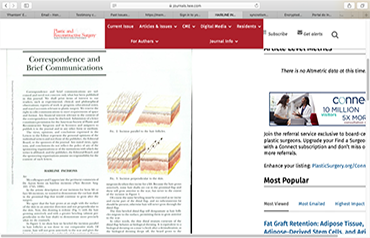
André Camirand, cirurgião plástico do Canadá, já havia publicado uma tática cirúrgica na incisão do retalho facial que permitia esconder melhor a cicatriz intrapilosa: ao invés de inclinar o bisturi paralelamente às hastes de cabelo, ele propositalmente fazia uma incisão perpendicular, de forma a cortar os folículos na borda da incisão e assim permitir que fios crescessem através da cicatriz (A COMPARISON BETWEEN PARALLEL HAIRLINE INCISIONS AND PERPENDICULAR INCISIONS WHEN PERFORMING A FACELIFT, Plast. Reconstr. Surg. 1997, janeiro 99(1): 10-15).
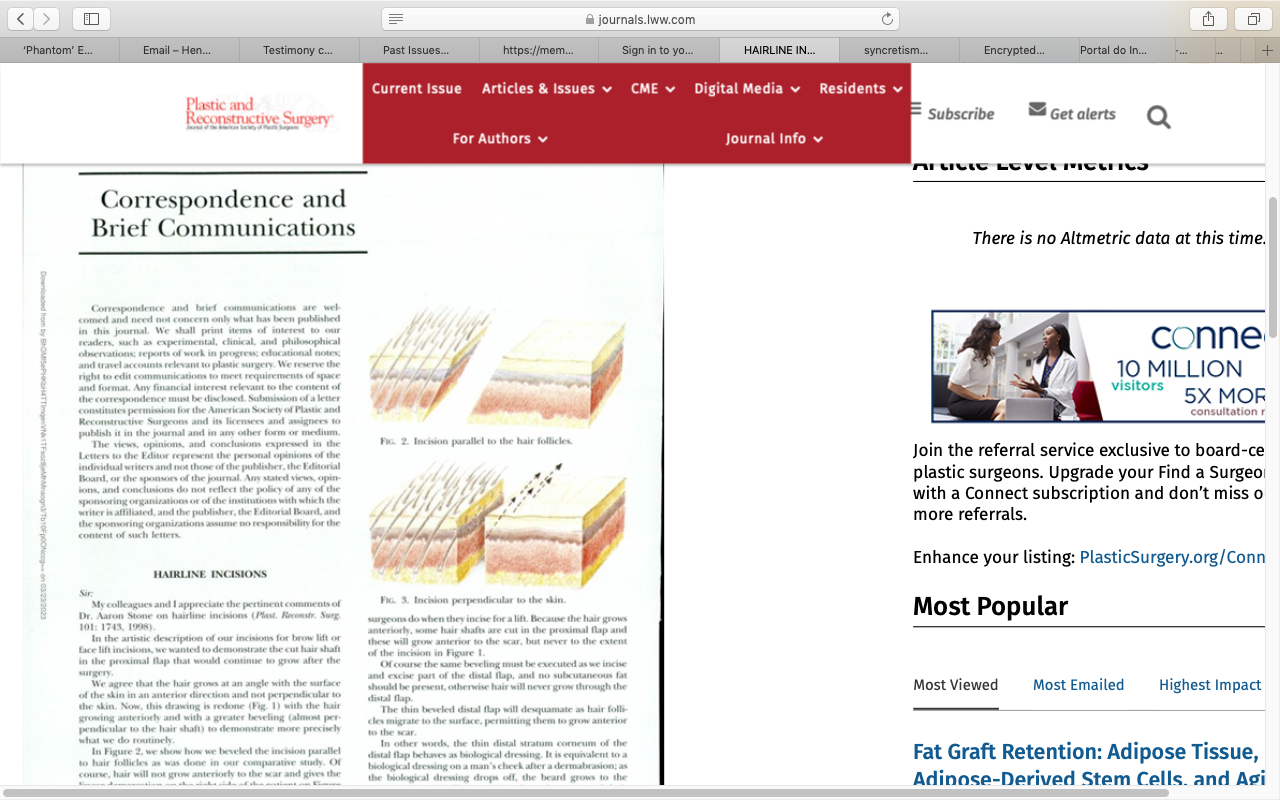
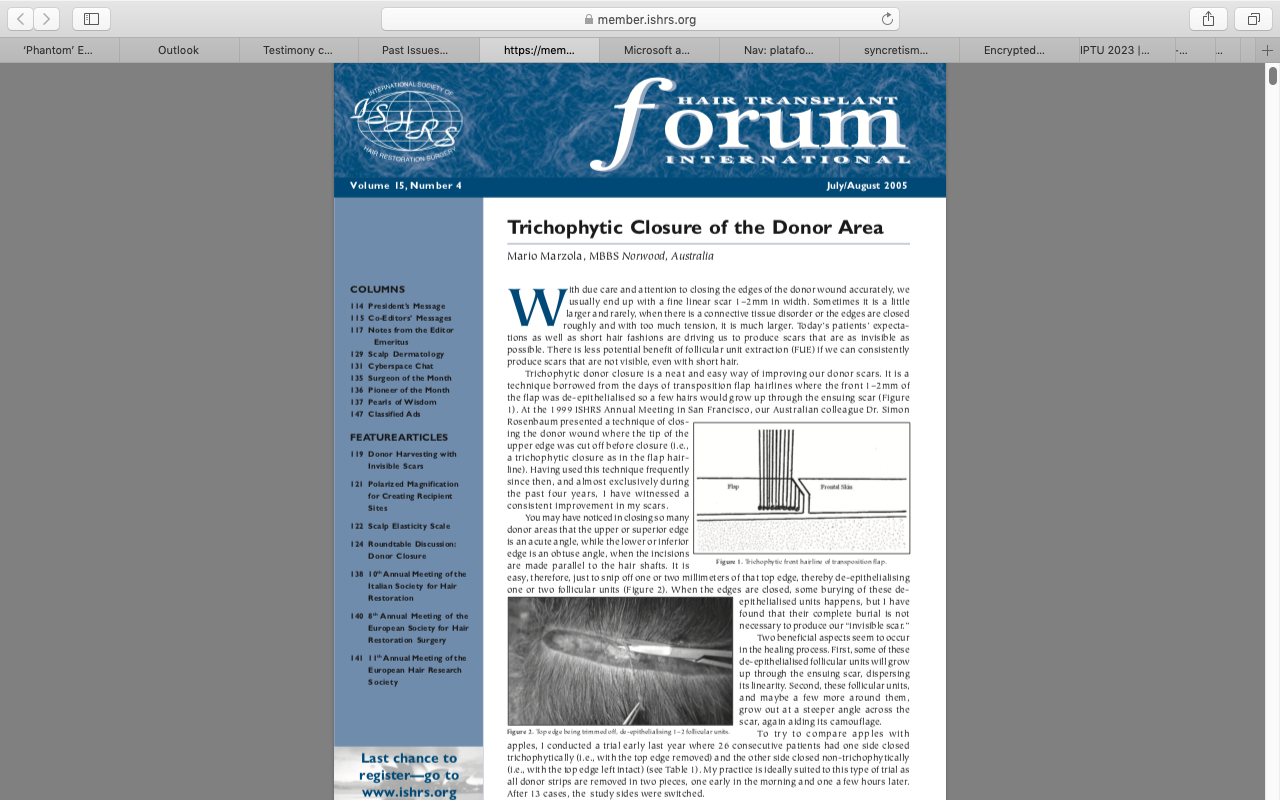
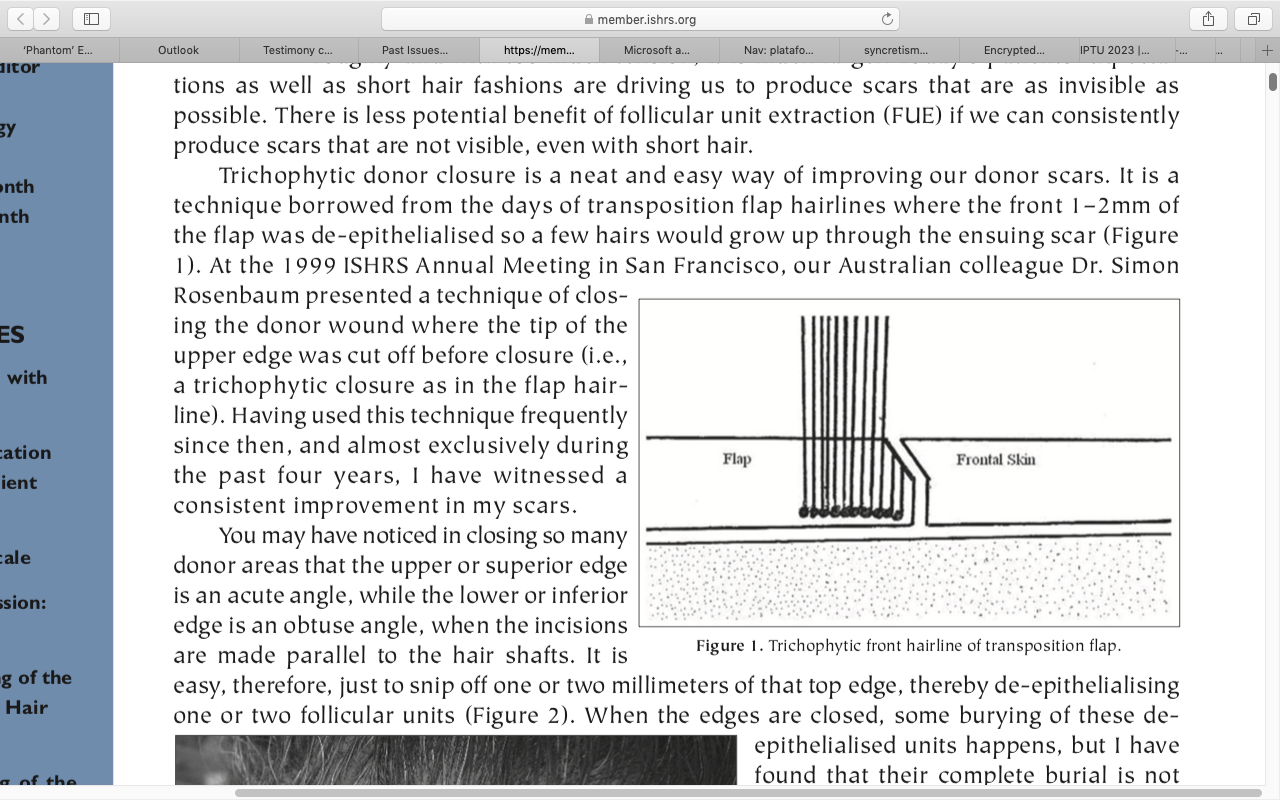
O Dr. Mario Marzola, da Austrália, descreveu o fechamento tricofítico após a retirada do fuso da área doadora, na revista Hair Forum, da ISHRS, em 2005 (volume 15, no.4, julho-agosto). Com o título de TRICHOPHYTIC CLOSURE OF THE DONOR AREA, ele descreve como consegue camuflar uma cicatriz, desepitelizando a borda superior da ferida cirúrgica, permitindo o crescimento de fios de cabelo por dentro da incisão. Ele admite que, se houver um alargamento da cicatriz, os fios poderão não esconder bem a incisão, portanto todo o cuidado deve ser tomado para evitar tensão no fechamento da ferida cirúrgica. Ele cita no artigo seu estudo de 26 pacientes, que tiveram metade da cicatriz fechada com o biselamento da incisão (sempre da borda superior), e a outra metade com fechamento simples. O autor notou uma evidente melhora no aspecto após sete meses do lado tricofítico. Ele conclui dizendo que esse procedimento não é uma panaceia, mas serve para deixar uma incisão linear mais bem escondida.
Curiosamente, no mesmo volume do Hair Forum, um outro autor, Patrick Frechet, da França, propõe a mesma técnica, mas desepitelizando a borda inferior, associada ao descolamento supra-galeal na margem superior. Seu artigo é intitulado DONOR HARVESTING WITH INVISIBLE SCARS. O título já merece uma crítica, uma vez que não podemos prometer ao paciente que sua cicatriz ficará invisível. Existem fatores que não podem ser controlados pelo cirurgião; mesmo com a melhor técnica cirúrgica, sabemos que alguns pacientes cicatrizam com menor qualidade, deixando cicatrizes alargadas. De qualquer maneira, Dr. Frechet descreve com muito entusiasmo como suas incisões ficam bem finas.
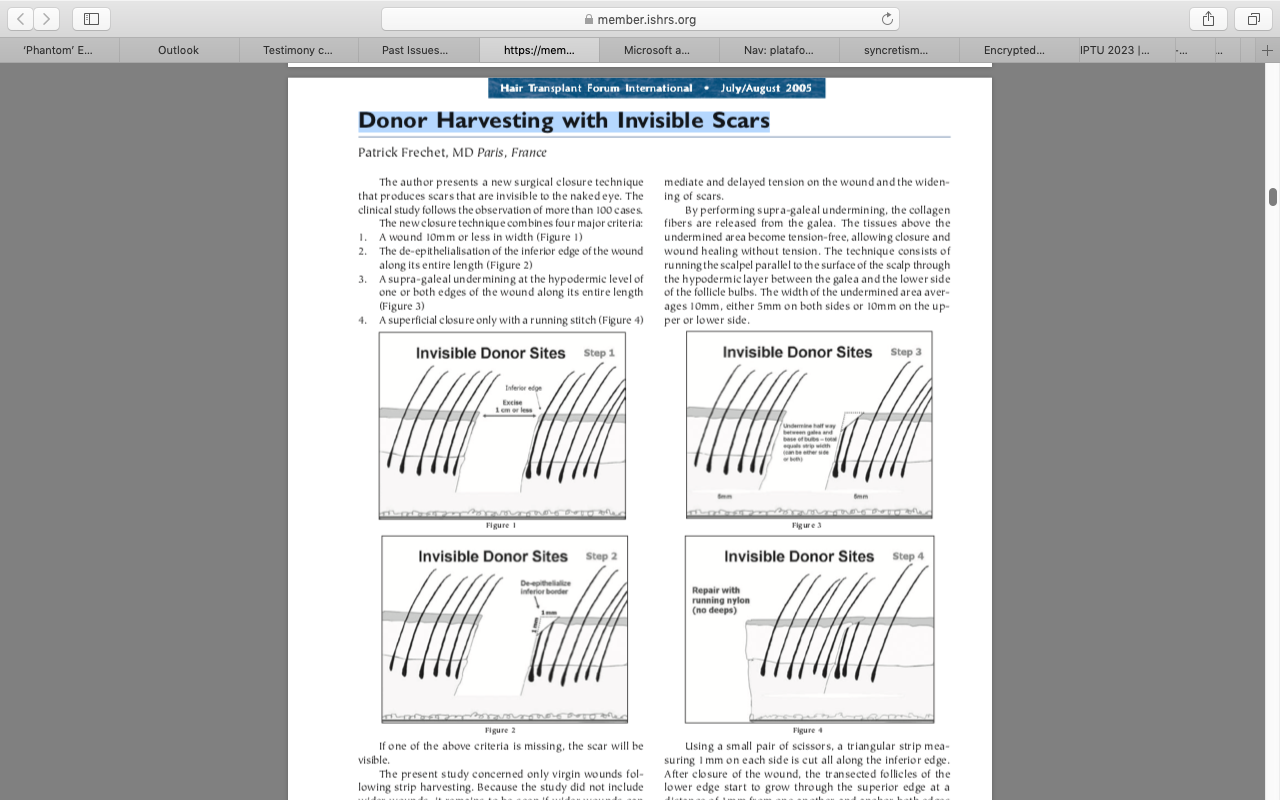
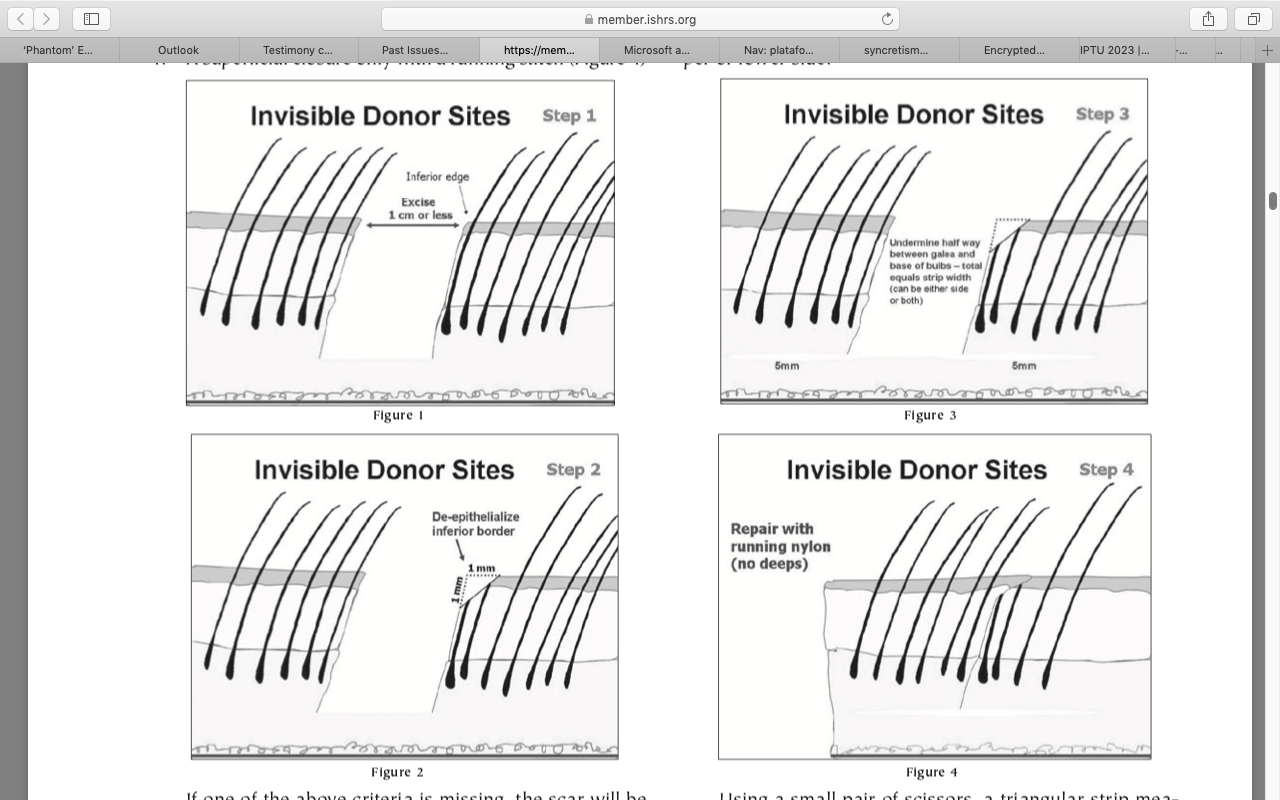
Lembro bem que nos Congressos subsequentes aos da ISHRS assisti a muitas mesas redondas sobre esse tema, com pequenas variações: discutia-se se era melhor aparar a borda superior, a inferior ou mesmo as duas. Também havia debate sobre se era necessário fazer o fechamento tricofítico na 1ª cirurgia ou se deveria aguardar a última sessão do paciente. Com o tempo, na minha prática, passei a usar este recurso em poucas situações: exclusivamente em homens, na maioria jovens, onde o cabelo mais curto poderia deixar transparecer a cicatriz linear. Na minha experiência, pacientes masculinos acima dos 50 anos e mulheres não necessitariam deste procedimento, uma vez que – na grande maioria das vezes – a cicatriz linear ficava muito bem escondida. Atualmente, na época dominada pela FUE, a discussão maior é como corrigir as cicatrizes (ressecção, transplante sobre a cicatriz, micropigmentação), mas aí já seria assunto para outra coluna.
English version
Reviewing the Trichophytic Scar
Reviewing the Trichophytic Scar
Colleagues at the ABCRC may ask why to review a subject that is forgotten, inside a drawer called "Outdated techniques"? Within hair restoration surgery, there are the temporo-parieto-occipital (Juri) flap, synthetic threads, glabrous area reduction procedures. Who still worries about a linear scar in the (almost exclusive) FUE era? At ABCRC, I am sure that many of the members have never performed follicular unit harvesting by removing a strip of skin.
However, the skin spindle technique persists and will continue to be indicated in certain situations. Some patients, usually over a certain age, do not allow shaving their head and are not bothered by a discreet scar that will never appear under their hair. They may know a patient friend who has had FUSS (follicular unit stripping surgery) and has shown them the scar, or their barber has mentioned that the scar line is very discreet. Videos of our cases may educate patients about how discreet an incision can be. Therefore, it is worth remembering the concern that some colleagues had, not so long ago, about how to make an incision as inconspicuous as possible.
André Camirand, a plastic surgeon from Canada, had already published a surgical tactic in the facial flap incision that allowed the intrapylous scar to be better hidden: instead of tilting the scalpel parallel to the hair shafts, he purposely made a perpendicular incision so as to cut the follicles at the edge of the incision and thus allow strands to grow through the scar (A COMPARISON BETWEEN PARALLEL HAIRLINE INCISIONS AND PERPENDICULAR INCISIONS WHEN PERFORMING A FACELIFT, Plast. Reconstr. Surg. 1997, January 99(1): 10-15).
Interestingly, in the same volume of the Hair Forum, Patrick Frechet, from France, proposes the same technique, but de-epithelializing the lower border, associated with supra-galeal detachment at the upper margin. His article is entitled DONOR HARVESTING WITH INVISIBLE SCARS. Since we cannot promise the patient that his scar will be invisible, then this title may be questioned. There are factors that cannot be controlled by the surgeon; even with the best surgical technique, we know that some patients heal with lower quality, leaving enlarged scars. In any case, Dr. Frechet describes with great enthusiasm how his incisions are fine.
Interestingly, in the same volume of the Hair Forum, Patrick Frechet, from France, proposes the same technique, but de-epithelializing the lower border, associated with supra-galeal detachment at the upper margin. His article is entitled DONOR HARVESTING WITH INVISIBLE SCARS. Since we cannot promise the patient that his scar will be invisible, then this title may be questioned. There are factors that cannot be controlled by the surgeon; even with the best surgical technique, we know that some patients heal with lower quality, leaving enlarged scars. In any case, Dr. Frechet describes with great enthusiasm how his incisions are fine.
I remember that in the Congresses that followed the ISHRS, I attended many round tables on this theme, with few variations: they discussed whether it was better to trim the upper border, the lower border, or even both. There was also debate as to whether it was necessary to do trichophytic closure at the first surgery or to wait until the patient's last session. In my practice, I started using this resource in a few situations: exclusively in men, mostly young men, where the shorter hair could show the linear scar. In my experience, male patients over fifty and women would not need this procedure, since, in most cases, the linear scar was very well hidden. Currently, at the time dominated by FUE, the biggest discussion is how to correct the scars (resection, transplantation over the scar, micropigmentation), but this would be a subject for another column.

