
Retalho Têmporo-Parieto-Occipital de Juri
Luiz Pimentel, Henrique Radwanski

A busca pela eliminação cirúrgica dos sinais da calvície acompanha a evolução da cirurgia plástica, desde os anos 1920. No livro “Chirurgie Esthétique Pure”, de 1931, Passot publica seu retalho homônimo, consistindo em dois retalhos parietais pequenos, que sofrem rotação para cobertura da linha frontal. Havendo dificuldade para alcançar a linha média, esse intervalo seria preenchido com tatuagem. Com esse conceito básico, José Juri, cirurgião plástico da Argentina, procura elaborar um retalho de maior comprimento, que poderia se estender ao longo de toda a linha capilar frontal. Começando em 1966, Juri descobre que, fazendo a autonomização prévia, ele poderia de fato criar um longo retalho, com 2-4 cm de largura. Pelos seus cálculos, esse retalho aportaria até quatro vezes mais quantidade de cabelos em comparação aos retalhos de Passot. Assim, Juri chegou a publicar, em 1975, o retalho TPO: têmporo-parieto-occipital, ou de Juri. Nas suas palavras: “O comprimento do retalho permitia a cobertura de toda a zona de alopécia frontal, chegando à zona pilosa parietal contralateral com facilidade. Um segundo retalho, do outro lado, poderia aumentar a largura dessa cobertura em duas vezes (ie. até 8 cm).”
Apesar do retalho de Juri não encontrar mais indicação alguma na cirurgia da calvície, há duas razões para recordar este procedimento. Em primeiro lugar, por fazer parte da história da correção cirúrgica da alopécia androgenética, mas principalmente para compreender as sequelas advindas desta operação. Um paciente, de mais idade, que se apresente hoje ao nosso consultório com um resultado do retalho RTPO representa um dos maiores desafios para um cirurgião capilar.
Vamos inicialmente recordar os riscos de se realizar o retalho: sem conhecimento preciso da anatomia vascular (é um retalho pediculado ao ramo posterior da a. temporal superficial), havia a possibilidade da perda total do tecido, e consequentemente de uma quantidade enorme de folículos. O fechamento da área doadora era bastante difícil, ainda mais em casos de pouca elasticidade do couro cabeludo. Havendo dificuldade, era necessário realizar um amplo descolamento de couro cabeludo e de pele cervical abaixo da mastoide, e mesmo assim o fechamento poderia causar algum comprometimento da circulação arterial.
Passados muito anos da realização do retalho, este paciente apresentará hoje os seguintes desafios: uma área doadora com muitas cicatrizes e, devido à tensão no fechamento, uma baixa densidade com cabelos muito finos; uma linha anterior totalmente artificial, sem respeito às entradas e com um tufo denso de cabelos; uma cicatriz anterior ao retalho, bem visível.
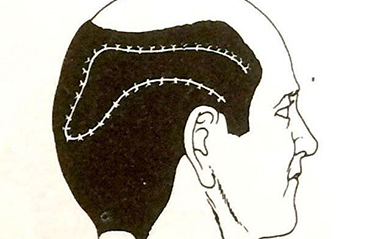
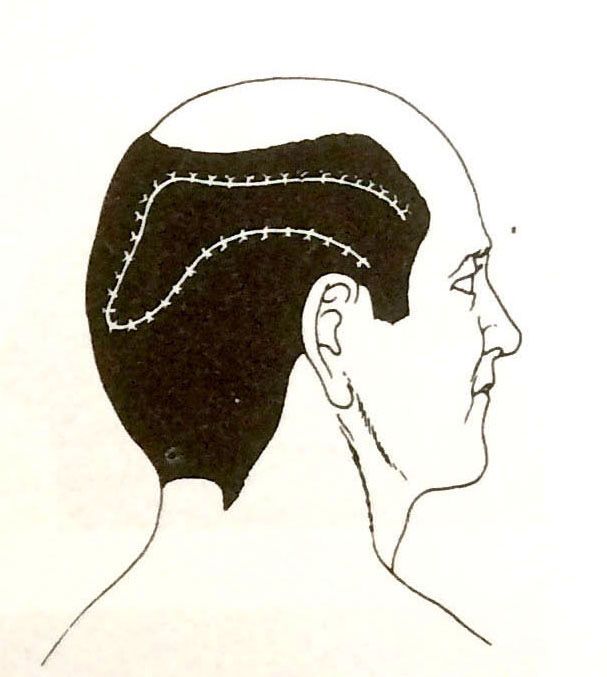
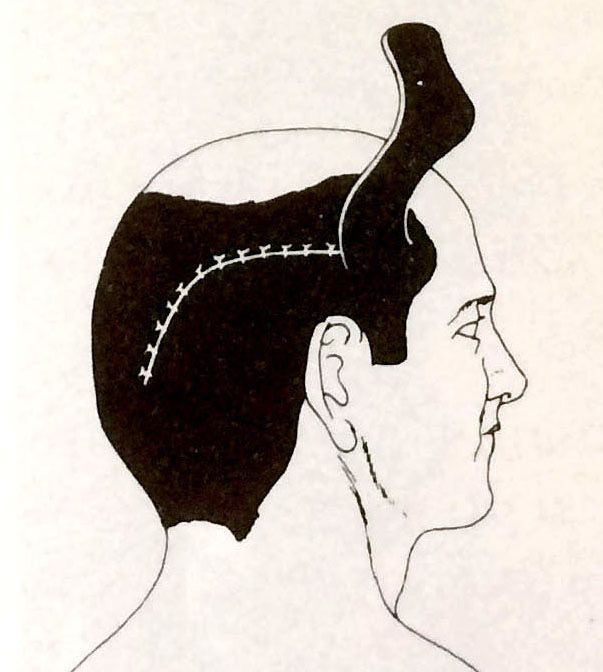
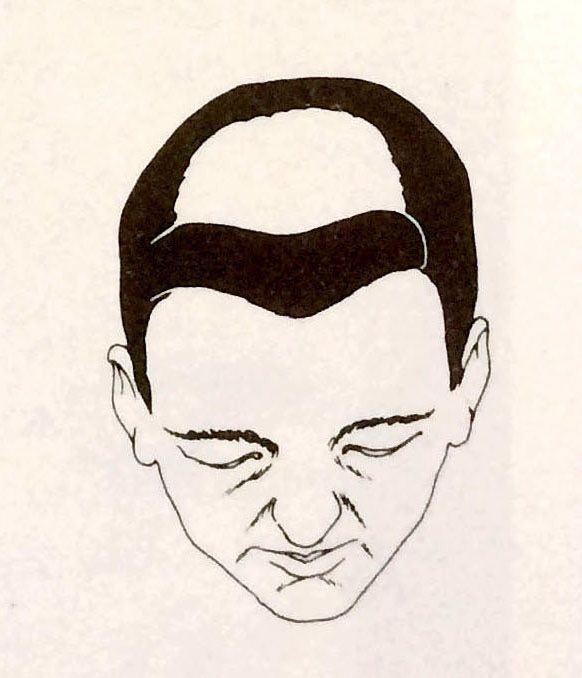
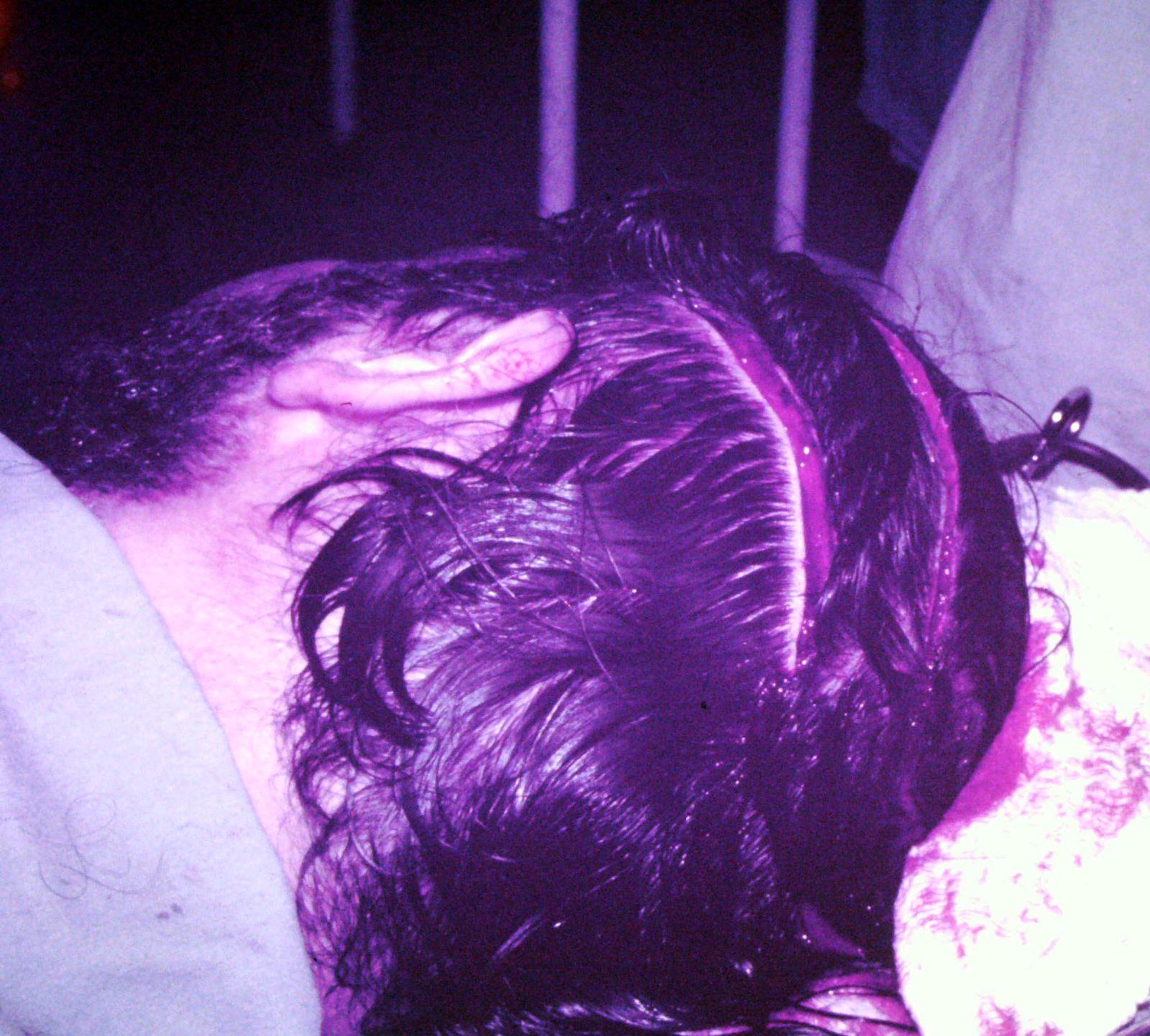
O segundo autor esteve com Juri em 1975 e em seguida iniciou sua experiência com o RTPO. O retalho englobava o ramo posterior da artéria temporal superficial para garantia vascular. Se fosse hoje, o trajeto arterial seria mais preciso com emprego de doppler vascular. Para maior certeza de sobrevivência o retalho poderia ser autonomizado, realizando-se as incisões em toda sua extensão e então re-suturado (fig 1). Após período mínimo de três semanas era então descolado e rotacionado para a linha frontal (figs 2,3,4).
Aqui segue relato do meu 1º paciente. Apesar da sobrevivência total do retalho, da inicial estranheza e surpresa do paciente ao ver dia seguinte grande volume de cabelo frontal e aceitação do resultado, da ausência de “entradas” de aspecto natural, da ausência do degradê na linha frontal, da presença de cicatriz linear, e de cabelos com inclinação para trás, este paciente trouxe dois outros para a mesma técnica.
Nos dois pacientes seguintes foi conseguido melhor aspecto dos recessos temporais tendo o retalho sido mais longo na região occipital (figs.5,6,7,8).
Em conclusão, apesar de, naqueles casos, ter ocorrido satisfação dos pacientes, nossa opinião foi que tais retalhos seriam válidos em reconstruções de couro cabeludo porém, em alopecia androgenética, não davam resultado natural e que, com a evolução da calvície, poderiam representar uma piora da naturalidade.
Referências:
Juri, J. Use of parieto-occipital flaps in the surgical treatment of baldness. Plastic and Reconstructive Suregry 55: 456, 1975
Juri, J., Juri, J.J. Cirugía Plástica del Cuero Cabelludo. AMOLCA, Buenos Aires, 2007
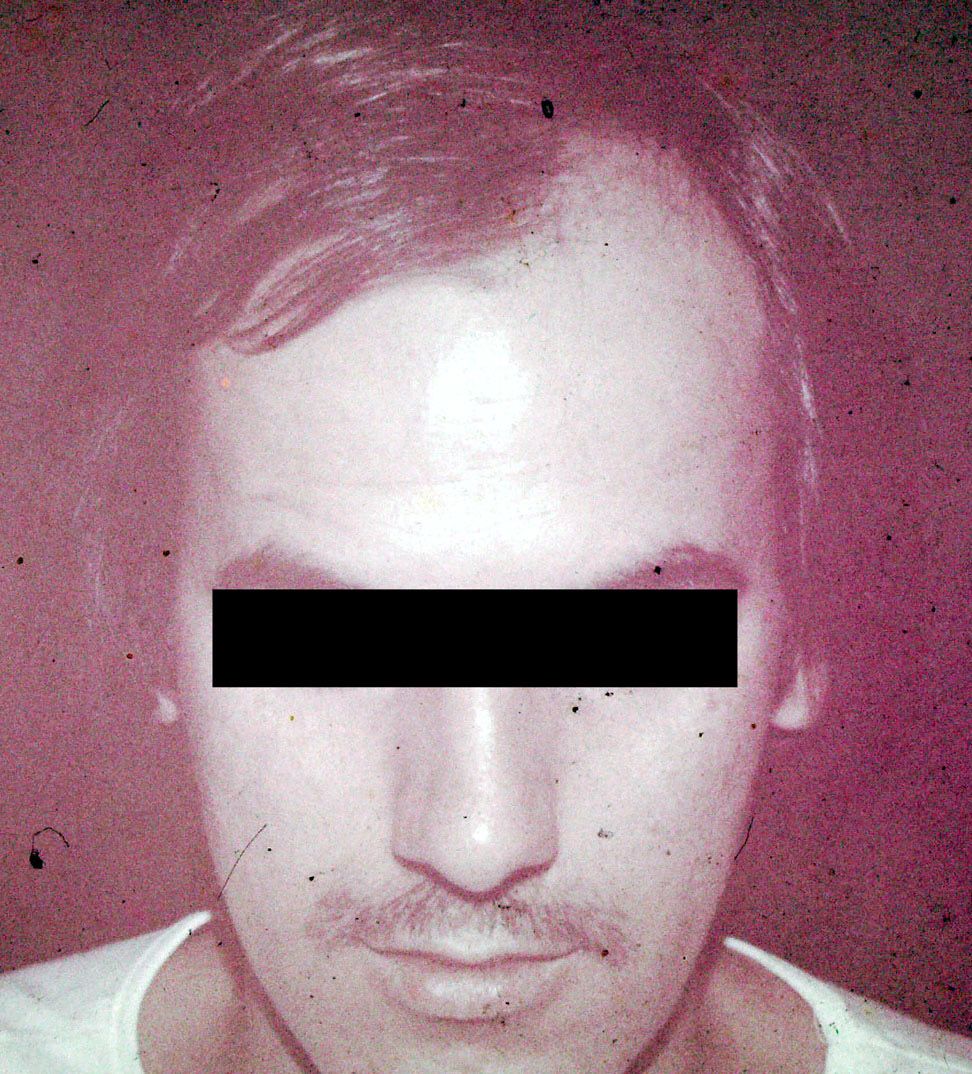
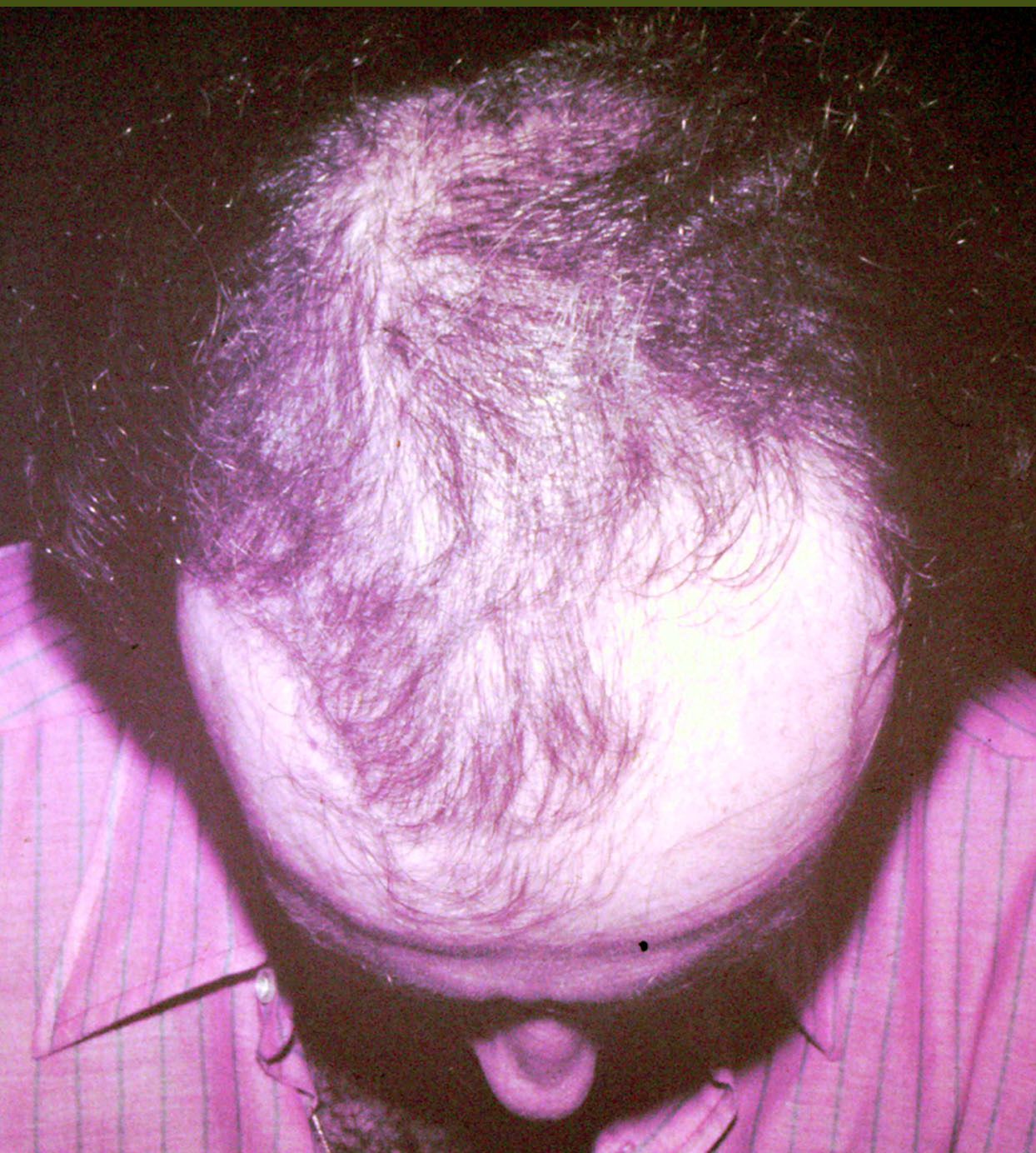
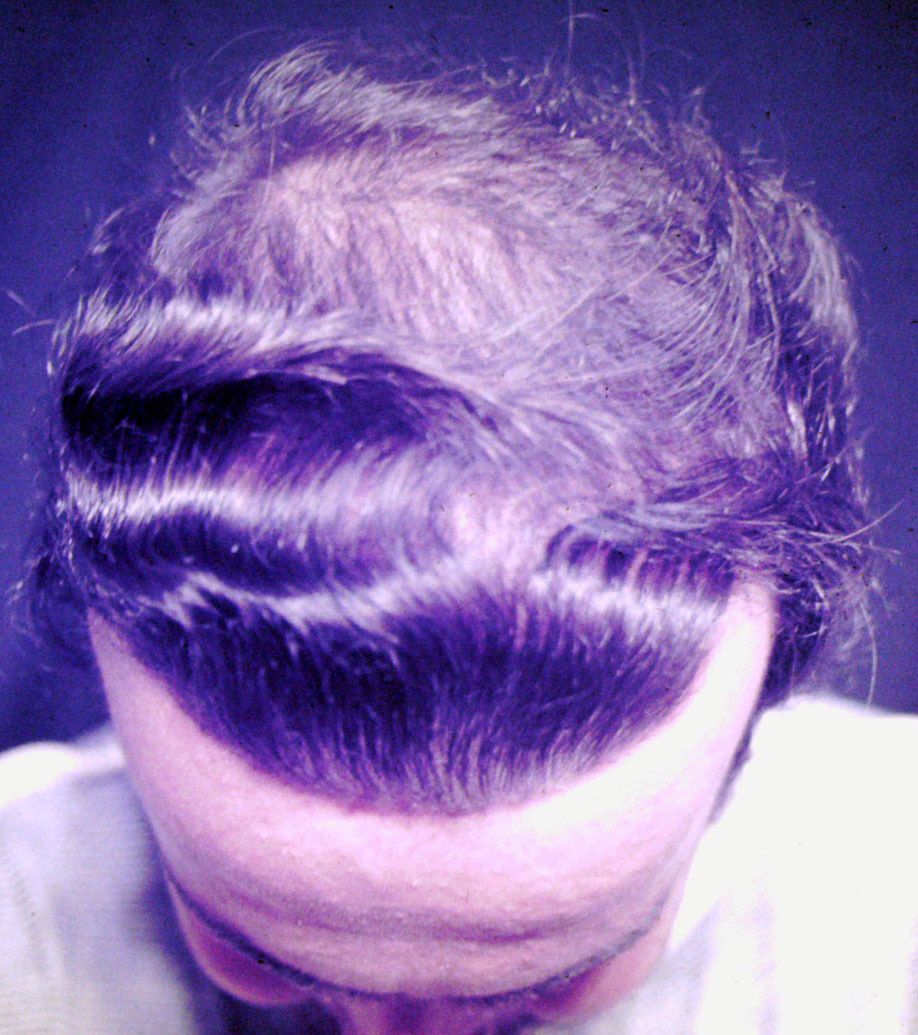
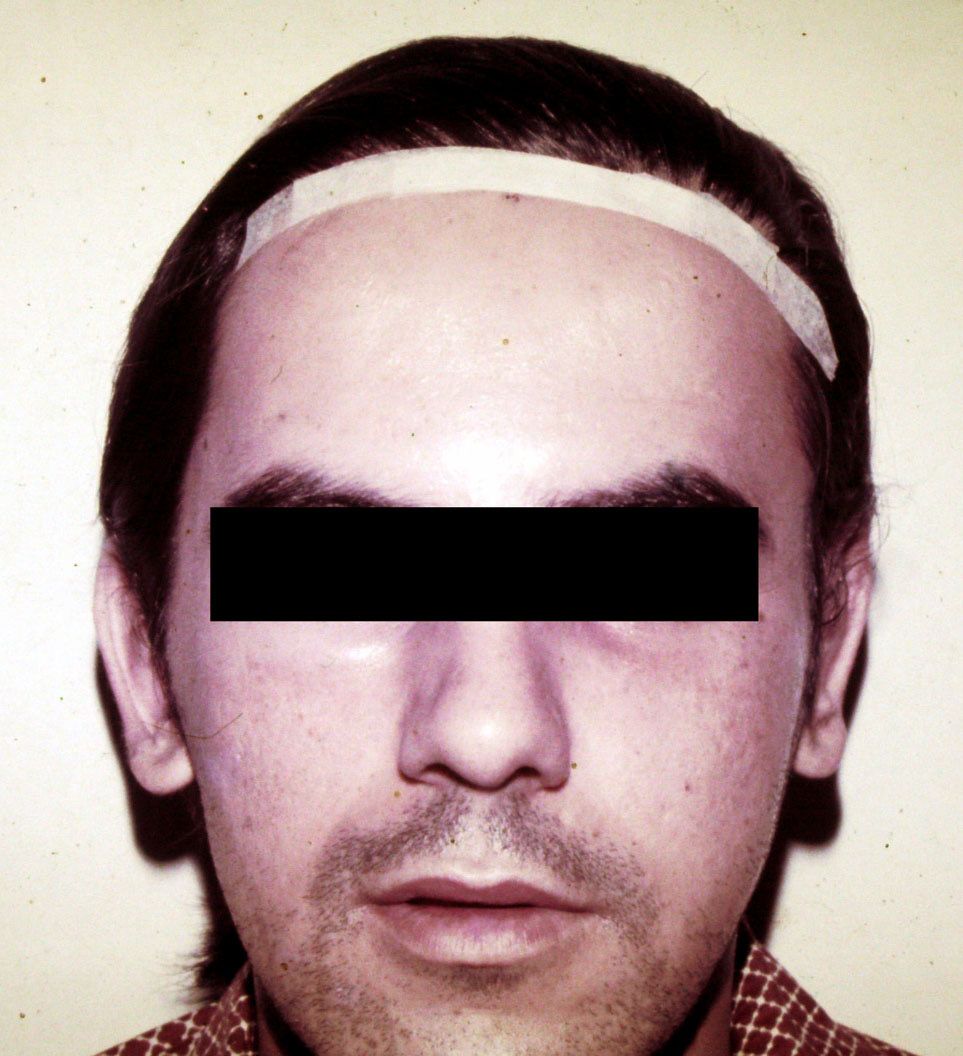
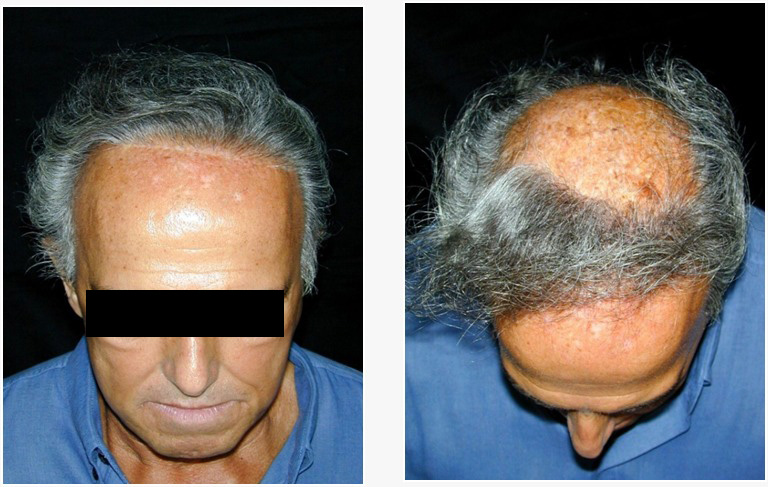
Caso de TPO operado jovem, apresenta todos os estigmas da cirurgia de retalho.
English version
THE USE OF JURI’S TEMPORO-PARIETO-OCCIPITAL FLAP
THE USE OF JURI’S TEMPORO-PARIETO-OCCIPITAL FLAP
Luiz Pimentel, Henrique Radwanski
The search for surgical elimination of the signs of baldness follows the evolution of plastic surgery since the 1920s. In the book “Chirurgie Esthétique Pure,” from 1931, Passot publishes his homonymous flap, consisting of two small parietal flaps, which are rotated to cover the frontal line. In case of difficulty in reaching the midline, this interval would be filled with a tattoo. With this basic concept, José Juri, a plastic surgeon from Argentina, seeks to create a longer flap, which could extend along the entire frontal hairline. In 1966, Juri discovered that by doing prior autonomization, he could create a long 2-4 cm wide flap. According to his calculations, this flap would provide up to four times more hair compared to Passot flaps. Thus, Juri published, in 1975, the TPO flap: temporo-parieto-occipital, or Juri’s flap. In his words: “The length of the flap allowed covering the entire area of ??frontal alopecia, easily reaching the contralateral parietal hairy area. On the other side, a second flap could increase the width of this coverage by two times (i.e., up to 8 cm).”
Although there is no more indication of the Juri flap in baldness surgery, there are two reasons to remember this procedure. Firstly, because it is part of the history of surgical correction of androgenetic alopecia, but to understand the consequences arising from this operation. An older patient coming to our office today with an RTPO flap result represents one of the biggest challenges for a hair surgeon.
First, we must remember the risks of performing the flap: without precise knowledge of the vascular anatomy (it is a flap pedicled to the posterior branch of the superficial temporal a.), there was the possibility of total tissue loss, and consequently a substantial number of follicles. Closing the donor area was quite difficult, especially in cases of low scalp elasticity. If it were difficult, it was necessary to carry out a wide detachment of the scalp and cervical skin below the mastoid, and even then, the closure could cause some impairment of arterial circulation.
Many years after the flap was created, this patient will present the following challenges today: a donor area with many scars and, due to the tension during closure, a low density with very fine hair; a completely artificial anterior line, without respect to the entrances and with a dense tuft of hair; a scar anterior to the flap, clearly visible.
The second author was with Juri in 1975 and then began his experience with the RTPO. The flap encompassed the posterior branch of the superficial temporal artery for vascular guarantee. If it were today, the arterial path would be more precise using a vascular Doppler. For greater certainty of survival, the flap could be autonomous, making the incisions along its entire length and then sutured again (fig 1). After a minimum period of three weeks, it was then detached and rotated to the frontal line (figs 2,3,4).
Here is a report from my first patient. Despite the total survival of the flap, the patient's initial strangeness and surprise upon seeing a large volume of frontal hair the following day and acceptance of the result, the absence of natural-looking “entrances”, the absence of the gradient in the frontal line, the presence of a scar linear, and with hair sloping back, this patient brought two others to the same technique.
In the following two patients, a better appearance of the temporal recesses was achieved, with the flap being longer in the occipital region (figs.5,6,7,8).
In conclusion, although, in those cases, patient was satisfied, we consider that such flaps would be valid in scalp reconstructions, however, in androgenetic alopecia, they did not give natural results and that, with the evolution of baldness, they could represent a worsening of naturalness.
References:
Juri, J. Use of parieto-occipital flaps in the surgical treatment of baldness. Plastic and Reconstructive Suregry 55: 456, 1975
Juri, J., Juri, J.J. Cirugía Plástica del Cuero Cabelludo. AMOLCA, Buenos Aires, 2007
Case of Temporo-Parieto-Occipital operated on young man, presents all the stigmas of flap surgery.

