
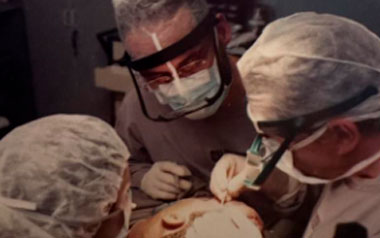
AS CIRURGIAS AO VIVO
Foram noites em claro pensando nas cirurgias do sábado, 19/06/2004. Testes e mais testes foram feitos com a intenção de oferecer a melhor transmissão, com imagens nítidas e aproximação ideal das câmeras para a compreensão de todos no auditório.
A programação cirúrgica contava com uma calvície masculina tipo VI, outra masculina tipo IV, com testa alta e recessos temporais, e mais uma calvície feminina tipo Ib de BASTO.
Tudo pronto! As cirurgias começaram pontualmente e para a nossa surpresa, depois de umas duas horas de atividades, veio a notícia de que, por motivo de força maior, os procedimentos não estavam sendo transmitidos para o auditório. Um estresse! E para solucionar da melhor forma possível, foi sugerido que os interessados viessem para o hospital o mais rápido possível para assistirem as cirurgias literalmente ao vivo, e até entrarem no campo operatório. Assim foi feito...
Além disso, foi exigido a gravação de inúmeros CDs para serem entregues aos participantes do evento. Tarefa realizada logo após o congresso.
Voltando ao bloco cirúrgico, cada cirurgia ficou sob a responsabilidade direta dos doutores Leão (MG) - calvície feminina, Speranzini (SP) - calvície masculina tipo VI e Basto (PE) - calvície masculina tipo IV.
Embora sob a responsabilidade de três cirurgiões e por conveniência do momento (falha na transmissão ao vivo), foi dada a opção de o titular e a critério dele, fazer substituições espontâneas entre os presentes para uma participação mais ativa e demonstrações de suas contribuições pessoais.
No paciente com calvície tipo IV, sob a responsabilidade de Basto, houve revezamento em algumas etapas cirúrgicas com os doutores Rassman (USA) - extração da faixa e técnica tricofítica, Knudsen (AU) - uso da lâmina sharepoint para incisões prévias, Sandoval in memoriam (MX) - uso da agulha customizada em "Z" para incisões em ângulos rasos, Souza (BA) - uso da tração manual para enxertia na região frontal, Maria Angélica Muricy (PR) - uso do vídeo capilus para facilitar o "slivering" e a retirada de um terço da faixa sob incisão conservadora, além de outros colegas que contribuíram com táticas pessoais para facilitar o procedimento.
O mesmo aconteceu na cirurgia do Dr. Speranzini, que contou com a participação especial de Lemos in memoriam (SP) e Pimentel (RJ) na etapa de enxertia das unidades.
Na cirurgia do Dr. Carlos E. Leão, houve participação ativa de colegas com perguntas e sugestões sobre determinadas abordagens.
Na sequência, algumas fotos retiradas durante as cirurgias:
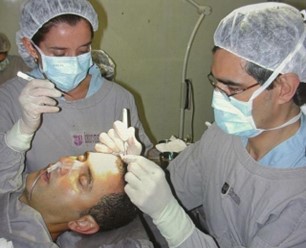
Dr. Mauro Speranzini (SP) - foto cedida pelo próprio cirurgião
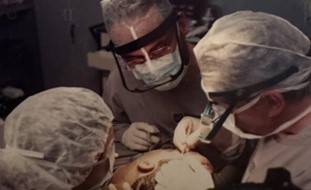
Drs. William Rassman (USA) e Fernando Basto (PE)
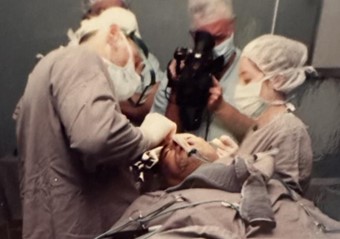
Drs. Fernando Basto (PE) e Ana Dantas (PE)
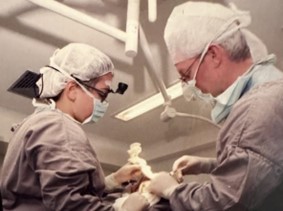
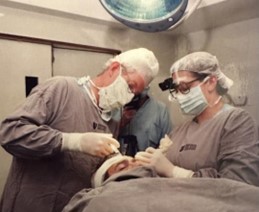
Dr. Knudsen (AU) auxiliado por Suienne (PE) / Dr. Knudsen (AU) auxiliado por Suienne (PE)
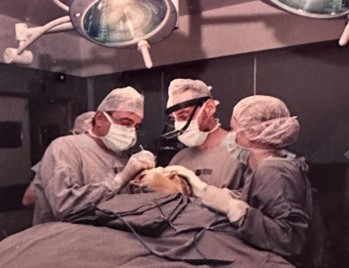
Drs Rassman (USA), Basto (PE) e Dantas (PE)
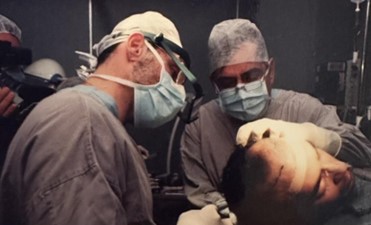
Retirada da faixa (técnica FUT) pelo Dr. Rassman (USA) e auxiliado pelo Dr. Basto (PE)
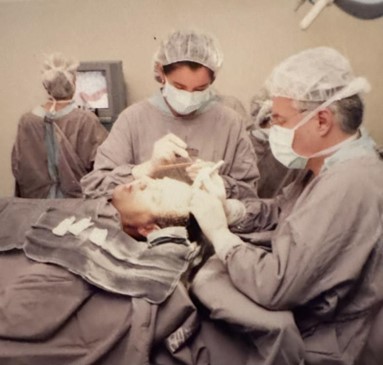
Dr. Leão (MG) , auxiliado pela Dra. Gorini (MG). Reparar o slivering sob auxílio do Vídeo Capilus ao fundo e destaque para o bisturi Leão.
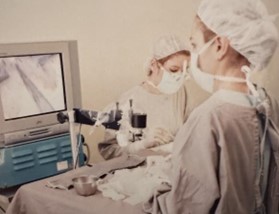
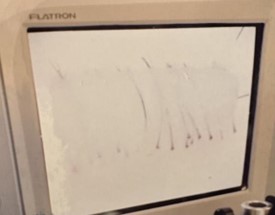
Dra. Maria A. Muricy (PR) demonstrando o slivering através do Vídeo Capilus.
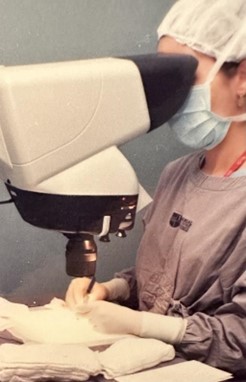
Uso do microscópio Mantis 3D para o slivering pela Dra. D. Leal (PE).
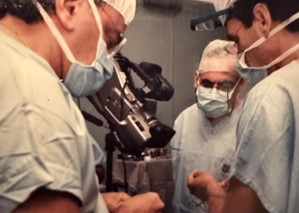
Dr. Sandoval in memoriam (MX) - demonstrando como customizar uma agulha em "Z" para incisões rasas.
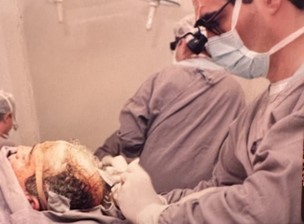
Dr. Ricardo Lemos in memoriam (SP) - ensinando sua abordagem na restauração capilar
A restauração capilar brasileira tem nome e sobrenome: ABCRC (Associação Brasileira de Cirurgia de Restauração Capilar). Sem o apoio da diretoria e de todos que estiveram presentes no primeiro congresso da associação, tudo seria muito mais difícil.
Esquecer jamais. Agradecer, sempre! ABCRC agradece a participação dos colegas que vieram de regiões próximas e outros de muito longe. Com o evento consumado, deu-se um passo importante para a criação de uma especialidade, hoje já reconhecida pelo Conselho Federal de Medicina como campo de atuação da cirurgia plástica e dermatologia, porém, na prática o Conselho não proíbe que médicos realizem o transplante capilar. Bom, de qualquer forma estamos no caminho certo...
Além disso, agradecer também aos atendentes das clínicas, assistentes cirúrgicos, Hospital Memorial São José, Instituto Ricardo Brennand,
Restaurante Chez Georges, hotel, recepcionistas, serviços de coffee break, ao media desk com o gerenciamento de todos os conteúdos com rapidez e segurança, a coordenadora geral do evento Patrícia Monteiro, dentre outras pessoas que direta e indiretamente ajudaram na realização desse primeiro congresso da ABCRC.
E sempre agradecer a Deus por tudo isso!
English version
The I ABCRC Congress - Part 6
LIVE SURGERIES
There were sleepless nights thinking about the surgeries on Saturday, June 19, 2004. Tests and more tests were carried out to have the best transmission, with clear images and ideal camera zoom for everyone in the auditorium to understand.
The surgical program included type VI male pattern baldness, type IV male pattern baldness, with a high forehead and temporal recesses, and another BASTO type Ib female pattern baldness.
Everything set! The surgeries began at the time scheduled, and after about two hours of activities, we were notified that, due to force majeure, the procedures were not being broadcast to the auditorium. What a stress! And to solve it in the best way possible, it was suggested that interested parties come to the hospital as quickly as possible to watch the surgeries live, and even enter the operating field. So, it was done.
In addition, it was required to record numerous CDs to be delivered to event participants. Task carried out right after the congress.
Each surgery was under the direct responsibility of Dr. Leão (MG) - female pattern baldness, Dr. Speranzini (SP) - type VI male pattern baldness and Dr. Basto (PE) - type IV male pattern baldness.
Although under the responsibility of three surgeons and due to live transmission failed, the responsible doctor had the option, at his discretion, to make spontaneous substitutions among those present for more active participation and demonstrations of their personal contributions.
In the patient with type IV baldness, under Dr. Basto's responsibility, some surgical steps were taken in turn with Dr. Rassman.
(USA) - strip extraction and trichophytic technique, Dr. Knudsen (AU) - use of the sharepoint blade for previous incisions, late Dr. Sandoval (MX) - use of the customized "Z" needle for incisions at shallow angles, Dr. Souza (BA) - use of manual traction for grafting in the frontal region, Dr. Maria Angélica Muricy (PR) - use of the capilus video to facilitate "slivering" and the removal of a third of the band under a conservative incision, in addition to other colleagues who contributed with personal tactics to facilitate the procedure.
The same happened in Dr. Speranzini’s surgery, which included the special participation of late Dr. Lemos (SP) and Dr. Pimentel (RJ) in the unit grafting stage.
In Dr. Carlos E. Leão's surgery, colleagues actively participated with questions and suggestions about certain approaches.
Below are some photos taken during the surgeries:
Dr. Mauro Speranzini (SP) - photo provided by him
Dr. William Rassman (USA) and Dr. Fernando Basto (PE)
Dr. Fernando Basto (PE) and Dr. Ana Dantas (PE)
Dr. Knudsen (AU) assisted by Suienne (PE) / Dr. Knudsen (AU) assisted by Suienne (PE)
Dr. Rassman (USA), Dr. Basto (PE) and Dr. Dantas (PE)
Removal of the belt (FUT technique) by Dr. Rassman (USA) and assisted by Dr. Basto (PE)
Dr. Leão (MG), assisted by Dr. Gorini (MG). Repair the slivering using the Video Capilus in the background.
Dr. Maria A. Muricy (PR) demonstrating slivering through the Capilus Video.
Use of the Mantis 3D microscope for slivering by Dr. D. Leal (PE).
Late Dr. Sandoval (MX) - demonstrating how to customize a "Z" needle for shallow incisions.
Late Dr. Ricardo Lemos (SP) - teaching his approach to hair restoration
Brazilian hair restoration has a first and last name: ABCRC (Brazilian Association of Hair Restoration Surgery). Without the support of the board and everyone who was present at the association's first congress, everything would be much more difficult.
Never forget it. Always be grateful! ABCRC thanks the participation of colleagues who came from nearby regions and others from far away. With the event completed, a key step was taken towards the creation of a specialty, now recognized by the Federal Council of Medicine as a field of action for plastic surgery and dermatology, however, in practice the Council does not prohibit doctors from performing hair transplants. We are on the right track.
Furthermore, we would also like to thank the clinic attendants, surgical assistants, Hospital Memorial São José, Instituto Ricardo Brennand,
Chez Georges restaurant, hotel, receptionists, coffee break services, the media desk with the management of all content quickly and safely, the general coordinator of the event Patrícia Monteiro, among other people who directly and indirectly helped in the organization of this first congress of ABCRC.
And always thank God for all of this!

