
Luiza de Queiroz Ottoni
Médica dermatologista pelo IAMSPE/HSPE-SP. Membro da SBD e ABCRC. Prática complementar em Tricologia pela USP. Atendimentos em tricologia e transplante capilar em clínica privada em Belo Horizonte – MG.
INTRODUÇÃO
A Alopecia Androgenética (AAG) é a causa mais frequente de perda capilar, acometendo até 80% de homens caucasianos e 40-50% mulheres1. É uma condição multifatorial e poligênica envolvendo fatores hormonais e de microinflamação, impactando significativamente a qualidade de vida e o psicológico dos pacientes.2 Ocorre a Miniaturização progressiva dos fios e redução da densidade capilar. Neste processo, os Andrógenos têm papel importante nos homens, e controverso em mulheres.1,3 A Testosterona livre pela ação da 5 alfa redutase é convertida em Dihidrotestosterona (DHT) que ativa na derme papilar os genes da calvície. Esse processo também ocasiona a redução de fase anágena e redução do tamanho da matriz do folículo capilar.1
Os inibidores da 5 alfa redutase (I5AR) já são tratamentos consagrados por sua eficácia no tratamento de AAG. Estudos tentam validar a eficácia, segurança e redução de efeitos adversos de tratamentos injetáveis como a mesoterapia com Dutasterida.
DUTASTERIDA
Os I5AR mais utilizados são: Finasterida, que inibe a enzima tipo II, e a Dutasterida que inibe as enzimas tipo I e II. A Dutasterida oral 0,5mg/dia mostrou-se ser mais potente que a Finasterida 1mg/dia reduzindo o DHT em 90% enquanto a Finasterida reduz 70%2,6 e possui meia vida de 5 semanas2. Não houve diferença estatisticamente significativa nos parâmetros de disfunção sexual entre as duas medicações.2,4,5
Na prática clínica há grande preocupação por parte principalmente do público masculino quanto ao uso dos I5AR sobre possíveis efeitos adversos sexuais dessas medicações como impotência, queda da libido e alterações da ejaculação. 1
Na tentativa de reduzir a absorção sistêmica e consequentemente os possíveis efeitos adversos, a mesoterapia com Dutasterida vem sendo cada vez mais usada e estudada na prática clínica em todo mundo. Paralelamente nos últimos anos a aplicação com MMP (Microinfusão de medicamentos na pele) vem ganhando espaço nos consultórios de dermatologistas e Cirurgiões capilares no Brasil. A formulação mais frequentemente comercializada no Brasil de Dutasterida é de 0.5% em 1ml de solução.
Estudos vêm mostrando que a Mesoterapia com Dutasterida é um tratamento efetivo, bem tolerado e possivelmente com menos efeitos adversos sexuais em comparação com o uso oral.
ESTUDOS SOBRE MESOTERAPIA COM DUTASTERIDA
Estudo retrospectivo observacional analítico de 2022 com 541 pacientes (71,5% mulheres e 28,5% homens), mostrou a eficácia e segurança da mesoterapia com Dutasterida a partir da análise de fotos pré e pós 12 meses. Foi utilizada a Dutasterida 0.01% (Skymedic) injetando-se 0.05ml a cada 1cm com agulha a 60º na maioria dos casos 2ml de solução a cada 3 meses. 84,1% dos pacientes estavam em uso de outros medicamentos por via oral também, sendo Dutasterida e Minoxidil orais os mais frequentes.1
A avaliação de dor foi realizada em 45,5% dos pacientes, 61,8% destes classificaram como moderada, 14,6% não sentiram dor, 9,3% relataram dor leve e 0.8% dor severa e persistente. Outros efeitos auto limitados: Edema frontal (7 casos), rash cutâneo com edema facial (3 casos precisaram de corticoide sistêmico), Hematoma (1 caso) e Foliculite leve (1 caso)
Dos 541 casos avaliados, 86 pacientes (15.9%) estavam em Monoterapia após os 12 meses de início do tratamento. Destes, 71 (86,6%) apresentaram melhora, sendo 33 casos com melhora marcante. Obtiveram melhor resposta (com p<0.05): Mulheres, pacientes mais velhos e intervalo de 3 meses.1 Nenhum relato de sintomas de queda de libido, disfunção erétil ou impotência foi relatado corroborando com estudos anteriores 1,2. Já foram relatados outros casos de efeitos adversos da mesoterapia como placas de alopecia, alopecia cicatricial e abscessos multifocais.6
A Mesoterapia se apresenta como boa opção, pois possibilita a redução da dose oral sem perda da resposta clínica. Além disso, por ter uma meia vida longa poderia ser aplicada com intervalo de meses.1 A injeção local limitaria a absorção sistêmica e efeitos adversos associados, sendo uma opção naqueles pacientes que não querem usar a via oral.1,2 Foi sugerido para estes casos em monoterapia a aplicação injetável a cada 3 meses.1,13
Com a associação da mesoterapia com Dutasterida poder-se-ia reduzir a dose oral da Dutasterida a 2-3 comprimidos por semana, dose que se mostrou mais tolerável e com menor incidência de efeitos adversos. A associação também é uma boa opção com outros tratamentos como Minoxidil tópico ou oral1,16. Um estudo retrospectivo sugere que a Dutasterida injetável tem melhor resposta no vertex em comparação com uso de Minoxidil oral em monoterapia.16

Retirado de Saceda-corralo d, et al Mesotherapy with dutasteride for androgenetic alopecia: A retrospective study in real clinical practice. J drugs dermatol. 2022 jul (fig2)
A) Alopecia androgenetica grau 2 em mulher de 37 anos.
B) Melhora significativa observada após 12 meses de tratamento com mesoterapia com dutasterida a cada 4 meses em monoterapia.
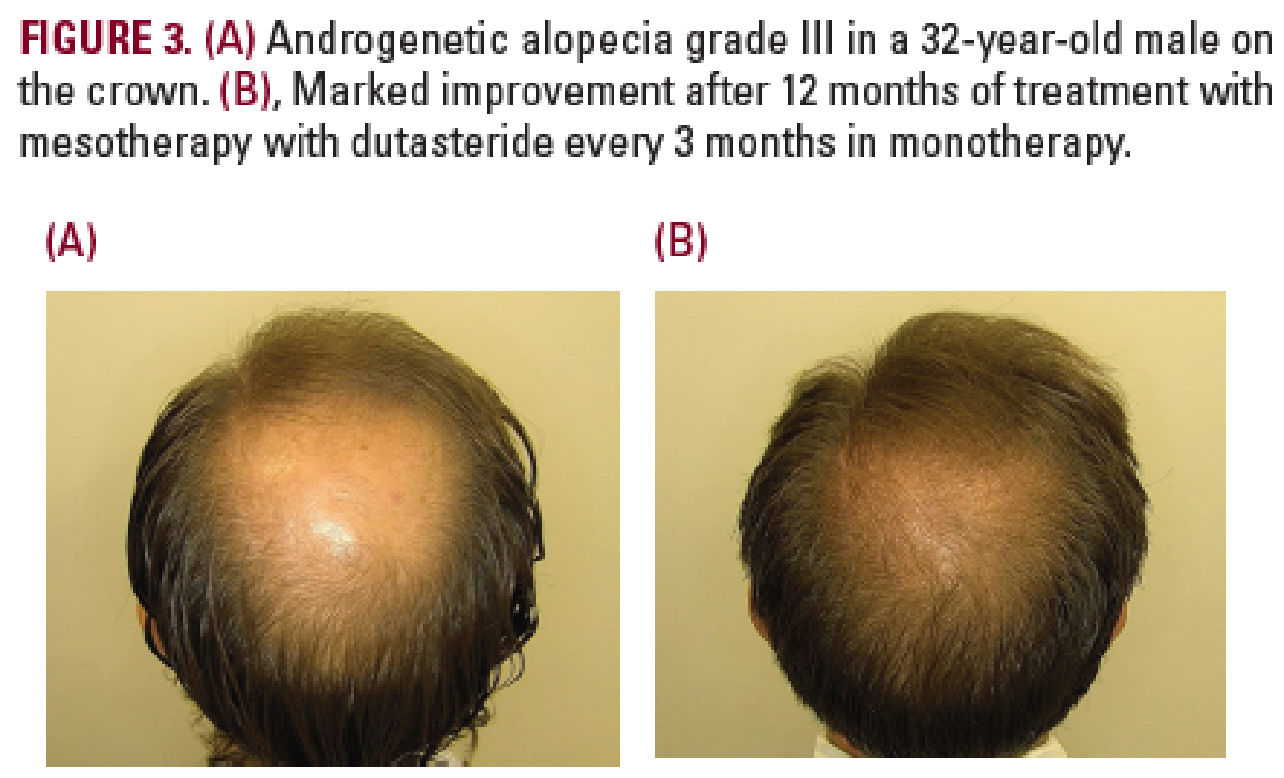
Retirado de Saceda-corralo d, et al Mesotherapy with dutasteride for androgenetic alopecia: A retrospective study in real clinical practice. J drugs dermatol. 2022 jul (fig3)
A) Alopecia androgenetica grau 3 vertex em um homem de 32 anos.
B) melhora marcante após 12 meses de tratamento com mesoterapia com dutasterida a cada 3 meses em monoterapia.
Estudos prévios mostraram que a mesoterapia com Dutasterida é segura, bem tolerada e efetiva para AAG. Um estudo mostrou alteração no espermograma não estatisticamente significante nos grupos que receberam dutasterida injetável, mas é um alerta para a contraindicação da mesoterapia com Dutasterida para homens com fertilidade comprometida ou em tentativa de engravidar as parceiras.9
Todos estudos são consistentes com a eficácia do tratamento. (resposta positiva: 62,8% - 92,9% dos casos). A heterogeneidade dos protocolos, doses, concentrações das soluções, frequência de tratamentos limitam as comparações assim como a avaliação do tratamento em monoterapia com mesoterapia com Dutasterida. No Brasil, por exemplo, as soluções mais frequentemente comercializadas de Dutasterida tem a concentração de 0.5% em 1ml de solução.
Principais estudos sobre MESOTERAPIA com DUTASTERIDA reportados na literatura
(adaptado de Saceda-corralo d, et al mesotherapy with dutasteride for androgenetic alopecia: A retrospective study in real clinical practice. J drugs dermatol. 2022 jul)
AOI: Avaliação do observador independente ASP: Avaliação subjetiva do paciente.
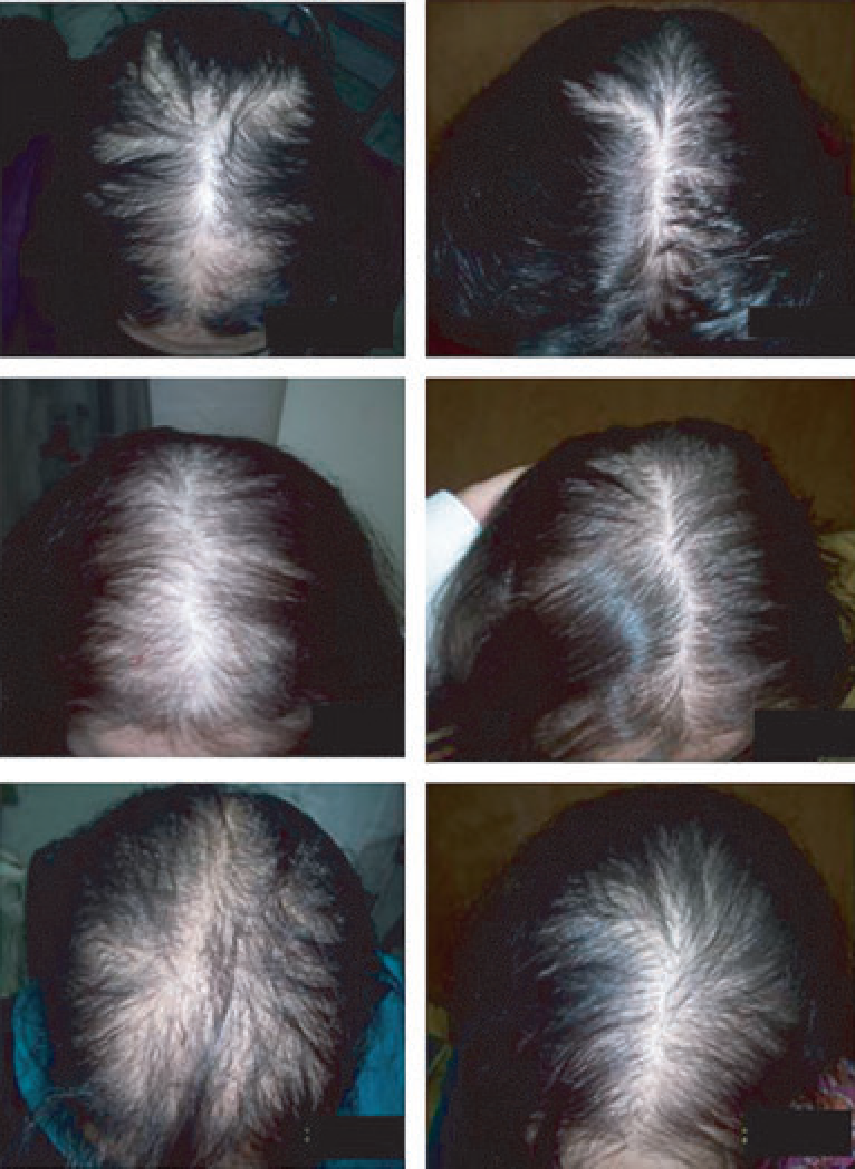
Retirado de Moftah N.et al. Mesotherapy usind dutasteride-containing preparation in treatment of female pattern hair loss: photographic, morphommetric and ultrastructural evaluation. J Eur Acad Dermatol Venerol. 2013, Jun. (fig.1) Pacientes com boa melhora; (a,c,e) três pacientes femininas Ludwig grau II antes da mesoterapia com preparação contendo dutasterida (b,d,f); 18ª semana boa resposta foi observada, evoluindo para grau 1.
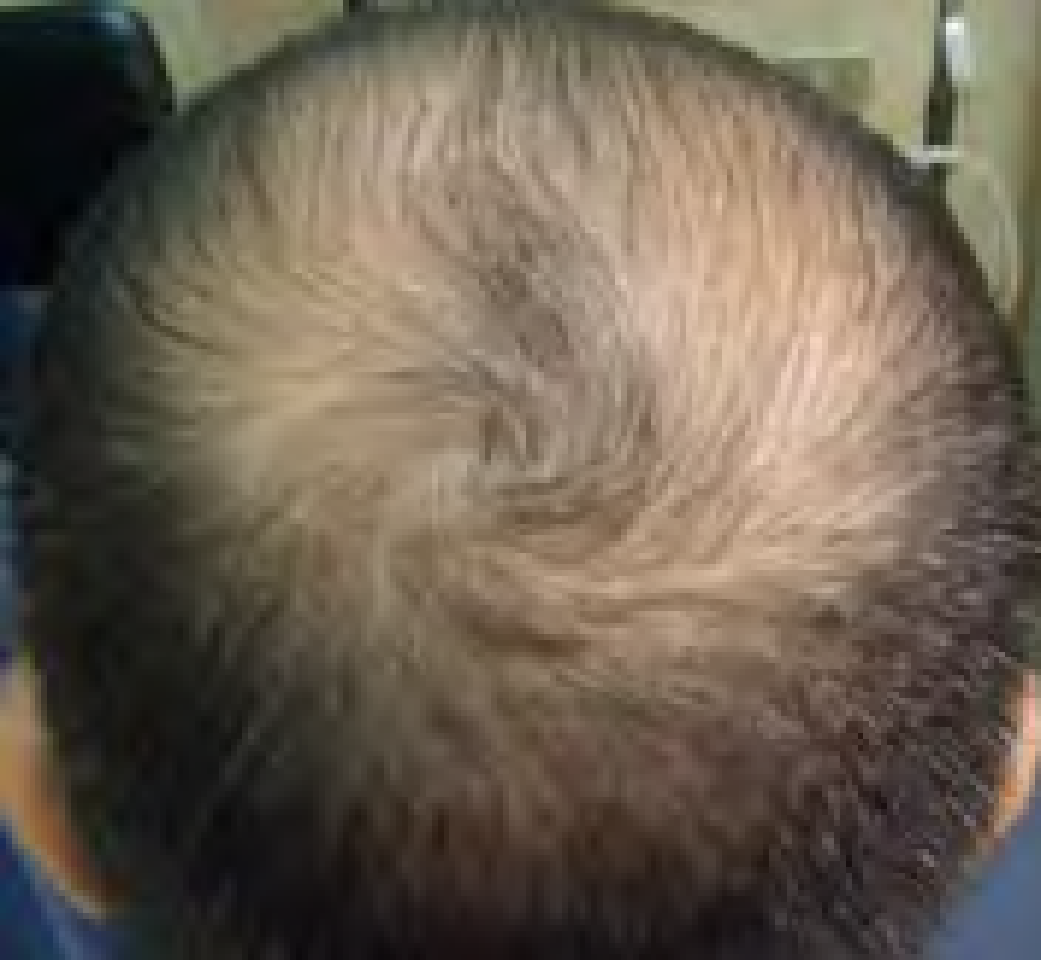
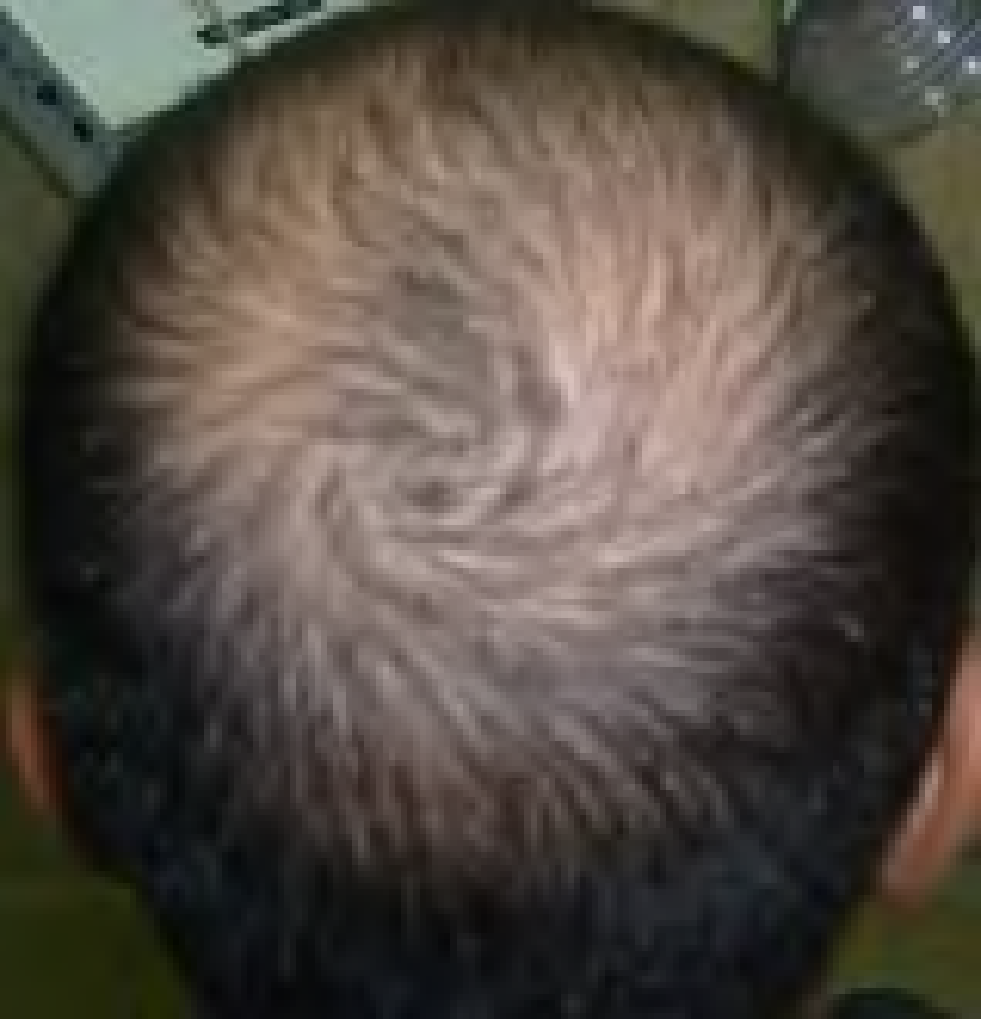
Retirado de Abdallah, M Mesotherapy using dutasteride containing solution in male pattern hair loss: a controlled pilot study. J Pan-Arab League Dermatol. 2009, feb. Fig. 1: a) Grupo 1 antes b) 12 semanas após tratamento. Avaliações: grau 4 pelo observador, grau 3 pela avaliação do paciente, impacto na contagem de fios 29 para 37(27.6 %).
MMP (Microinfusão de medicamentos na pele)
A MMP® é uma técnica descrita por Arbach e Godoy em 2013, que utiliza uma máquina de tatuagem para infundir medicações na pele, com o intuito de tratar doenças. As microagulhas, embebidas pelo medicamento, penetram a pele, empurrando-o para o meio intercelular, tangido pela força de cisalhamento. O espaço entre as agulhas permite que haja áreas de pele sã entre locais de pele tratada, favorecendo a reepitelização, semelhante ao que ocorre em um fracionamento delicado. 10
Para uso em AAG temos um relato de caso publicado de 2 pacientes. Em um foi infundida solução estéril de Minoxidil 0,5% com a máquina de tatuagem Cheyenne e no outro foram feitas apenas micropunturas. A profundidade regulada foi de 1,5mm, sendo o procedimento finalizado com observação de orvalho sangrante em toda área tratada. O paciente que recebeu MMP® com Minoxidil realizou 4 sessões mensais e o que recebeu apenas MMP 3 sessões. Houve resposta parcial e cosmeticamente satisfatória em ambos os casos sem significância estatística. 11
Este procedimento vem ganhando espaço nos consultórios dermatológicos e de cirurgiões plásticos com atuação na área capilar, mas ainda não temos publicações com uso de Dutasterida com MMP. É uma técnica promissora, porém são necessários mais estudos e padronização dos medicamentos, dose total e profundidade de aplicação. Em comparação com a mesoterapia, o MMP entregaria uma quantidade menor de medicação com distribuição mais homogênea da medicação, sem efeito de bolus. 12 Como uma pequena parte da medicação aplicada com o MMP® não é injetada poderia também haver uma absorção transdérmica. Portanto, não sabemos ainda o quanto efetivamente de medicamento seria absorvido sistemicamente. Na Mesoterapia todo conteúdo é injetado diretamente na pele.
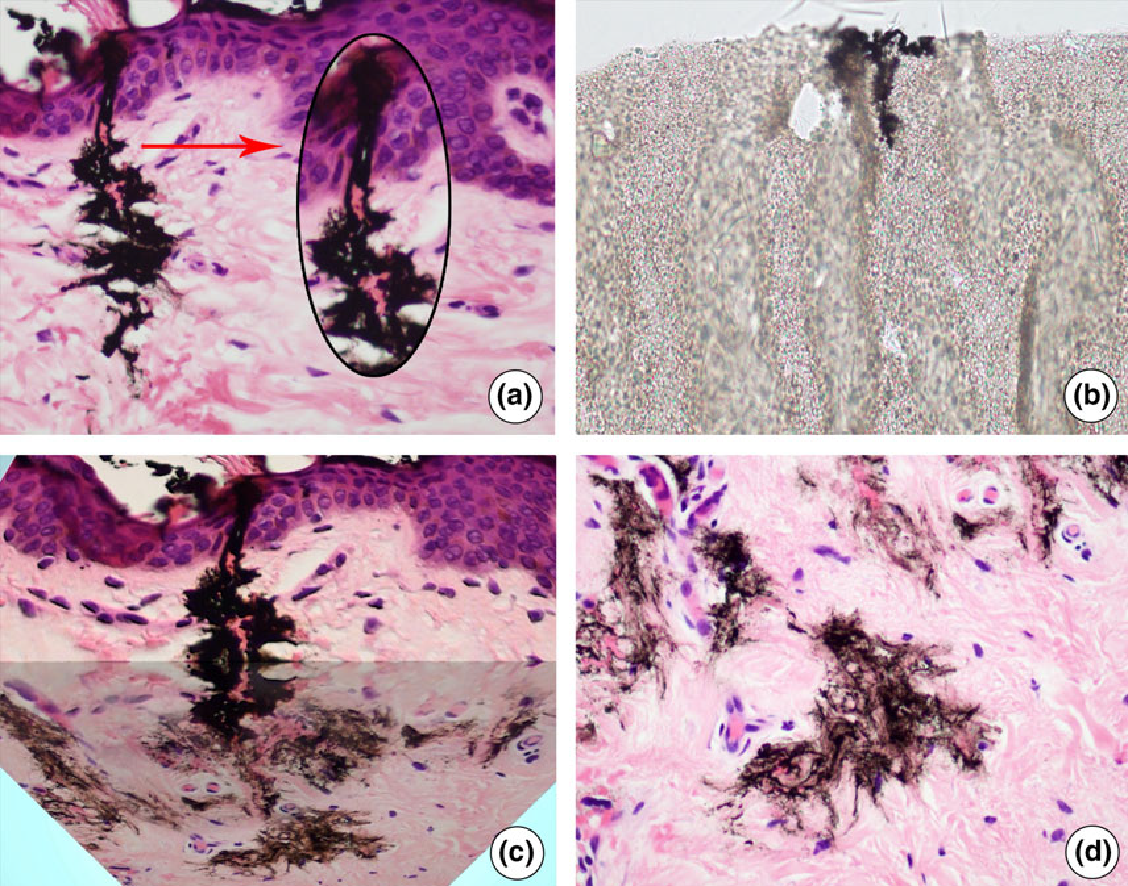
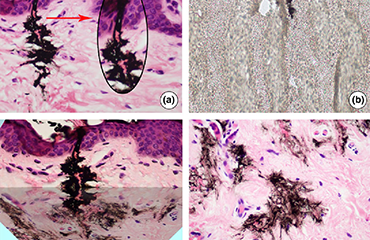
Retirado de Arbach, S. et al How much medication is delivered in a novel drug delivery technique that uses a tatto machine? International Journal of Dermatology 2019
Análise microscópica da MMP drug delivery
a) aspecto histológico de drug delivery com tinta alcançando a derme reticular.
b) exame microscópico de tinta na pele sem coloração.
c) recriação em 3D usando 2 cortes histológicos de pele.
d) corte superficial na derme mostrando pigmento entre fibras de colágeno
CONCLUSÕES
A mesoterapia com Dutasterida foi efetiva nos estudos para AAG masculina e feminina. Há necessidade de se realizarem novos estudos prospectivos com controle randomizado para se estabelecer melhor a segurança e eficácia. Seria interessante futuros estudos compararem a absorção sistêmica e eficácia da mesoterapia e da aplicação com MMP® comparado com o tratamento de Dutasterida oral para verificar também a diferença nos efeitos adversos. Até então, os efeitos adversos relatados foram leves e autolimitados e nenhum estudo teve evento adverso na esfera sexual com uso de Dutasterida em mesoterapia. Este tratamento pode ser uma boa complementação nos casos de pacientes que não desejam usar os I5AR ou que apresentaram efeitos adversos sistêmicos ou naqueles em uso de dose oral reduzida deste grupo de medicação.
Referências:
1. Saceda-corralo d, et al Mesotherapy with dutasteride for androgenetic alopecia: A retrospective study in real clinical practice. J drugs dermatol. 2022 jul
2. Herz-Ruelas, M. et al Efficacy of Intralesional and Oral Dutasteride in the treatment of Androgenetic Alopecia: A Systematic review. Skin Appendage Disord. 2020 oct
3. Dhurat, R. et al. 5 alpha reductase inhibitors in androgenetic alopecia: Shifting paradigms, current concepts, comparative efficacy, and safety. Dermatol therapy 2020 abril.
4. Zhou Z, et al . The efficacy and safety os dutasteride compared with finasteride in treating men with androgenetic alopecia: a systematic review and meta-analysis. Clin. Interv Aging 2019
5. Shanshanwal S, Dhurat, R. Superiority of dutasteride over finasteride in hair regrowth and reversal of miniaturization in men with androgenetic alopecia: A randomized controled open label, evaluator blinded study. Indian Journal of Dermatol, 2017
6. Busanello EB, Turcatel E. Androgenetic alopecia and dutasteride in hair mesotherapy, a short review. Our Dermatol Online, 2017, sep.
7. Abdallah M, Mesotherapy using dutasteride containing solution in male pattern hair loss: a controlled pilot study. J Pan-Arab League Dermatol. 2009, feb
8. Moftah N.et al. Mesotherapy usind dutasteride-containing preparation in treatment of female pattern hair loss: photographic, morphommetric and ultrastructural evaluation. J Eur Acad Dermatol Venerol. 2013, Jun.
9. Sobhy N et al. Evaluation of effect of injection of dutasteride as mesotherapeutic tool in treatment of androgenetic alopecia in males. Our Dermatol Online. 2013
10. Preisler, L , Souza, L. Cunha, M. Microinfusion of drugs into the skin- MMP® : overview, review of indications,and safety profile.
11. Contin, L. Male androgenetic alopecia treated with microneedling alone or associated with injectable minoxidil by microinfusion of drugs into the skin, Surg Cosmet Dermatol 2016
12. Arbach, S. et al How much medication is delivered in a novel drug delivery technique that uses a tatto machine? International Journal of Dermatology 2019
13. Saceda Coralo Mesotherapy with dutasteride in the treatment of androgenetic alopecia. Int J Trichology 2017
14. Merino N et al, Mesotherapy with dutasteride and Minoxidil in treatment of androgenetic alopecia. J Am Acad Dermatol 2018
15. Morales-Miranda Dutasteride Micro-Injections in Androgenetic Alopecia. Dermatología Cosmética, Médica y Quirúrgica. 2019 abr-jun
16. Villarreal C. Dutasteride intralesional microinjections in combination with oral Minoxidil vs. Oral Minoxidil monotherapy in men with androgenetic alopecia: a retrospective analysis of 105 patients.
Edição 26, artigo 1.
English version
Mesotherapy with Dutasteride in the treatment of Androgenetic Alopecia
Luiza de Queiroz Ottoni
Dermatologist at IAMSPE/HSPE-SP. Member of SBD and ABCRC. Complementary practice in Trichology by University of São Paulo (USP). Trichology and hair transplantation in a private clinic in Belo Horizonte – MG.
INTRODUCTION
Androgenetic Alopecia (AGA) is the most frequent cause of hair loss, affecting up to 80% of Caucasian men and 40-50% of women1. It is a multifactorial and polygenic condition involving hormonal and microinflammation factors, significantly impacting the quality of life and psychological aspects of patients.2 Progressive miniaturization of hairs and reduction of capillary density occurs. In this process, androgens play a significant role in men, and a controversial role in women.1,3 Free Testosterone, due to the action of 5-alpha-reductase, is converted into Dihydrotestosterone (DHT), which activates baldness genes in the papillary dermis. This process also causes a reduction in the anagen phase and a reduction in the size of the hair follicle matrix.1
5-alpha-reductase inhibitors (I5AR) are already established treatments for their effectiveness in the treatment of AGA. Studies try to validate the efficacy, safety, and reduction of adverse effects of injectable treatments such as mesotherapy with Dutasteride.
DUTASTERIDE
Most common used I5AR are Finasteride, which inhibits type II enzyme, and Dutasteride, which inhibits type I and II enzymes. Oral Dutasteride 0.5mg/day proved to be stronger than Finasteride 1mg/day in reducing DHT by 90% while Finasteride reduces it by 70%2,6 and has a half-life of 5 weeks2. There was no statistically significant difference in sexual dysfunction parameters between the two medications.2,4,5
In clinical practice, there is great concern on the part of the male public regarding the use of I5AR about possible sexual adverse effects of these medications, such as impotence, decreased libido and ejaculation alterations. 1
Trying to reduce systemic absorption and consequently the possible adverse effects, mesotherapy with Dutasteride has been increasingly used and studied in clinical practice worldwide. At the same time, in recent years, the application with Skin Medicine Microinfusion has been gaining ground with dermatologists and hair surgeons in Brazil. The most frequently marketed formulation of Dutasteride in Brazil is 0.5% in 1 ml of solution.
Studies have shown that Dutasteride Mesotherapy is an effective treatment, well tolerated and with fewer sexual adverse effects compared to oral use.
STUDIES ON MESOTHERAPY WITH DUTASTERIDE
Analytical retrospective observational study from 2022 with 541 patients (71.5% women and 28.5% men), showed the efficacy and safety of mesotherapy with Dutasteride based on the analysis of photos before and after 12 months. Dutasteride 0.01% (Skymedic) was used, injecting 0.05ml every 1cm with a needle at 60º, in most cases, 2ml of solution every three months. 84.1% of patients were using other oral medications as well, with oral Dutasteride and Minoxidil being the most frequent.1
Pain assessment was made in 45.5% of patients, 61.8% of them classified it as moderate, 14.6% did not feel pain, 9.3% reported mild pain and 0.8% severe and persistent pain. Other self-limited effects: Frontal edema (7 cases), skin rash with facial edema (3 cases needed systemic corticosteroids), Hematoma (1 case) and mild folliculitis (1 case)
Of the 541 cases evaluated, 86 patients (15.9%) were on monotherapy after 12 months of treatment initiation. Of these, 71 (86.6%) showed improvement, with 33 cases showing marked improvement. They obtained the best response (with p<0.05): Women, older patients and 3-month interval.1 No symptoms of decreased libido, erectile dysfunction or impotence were reported, corroborating previous studies 1,2. Other cases of adverse effects of mesotherapy have already been reported, such as alopecia plaques, cicatricial alopecia and multifocal abscesses.6
Mesotherapy is a good option, as it allows the reduction of the oral dose without losing clinical response. In addition, due to its long half-life, it could be applied every few months.1 Local injection would limit systemic absorption and associated adverse effects, being an option for those patients who do not want to use oral administration.1,2 It has been suggested for these cases in monotherapy the injectable application every three months.1,13
With the association of mesotherapy with Dutasteride, the oral dose of Dutasteride could be reduced to 2-3 tablets per week, a dose proved to be more tolerable and with a lower incidence of adverse effects. The association is also a good option with other treatments such as topical or oral Minoxidil1,16. A retrospective study suggests that injectable Dutasteride has a better vertex response compared to the use of oral Minoxidil in monotherapy.16
From Saceda-corralo d, et al Mesotherapy with dutasteride for androgenetic alopecia: A retrospective study in real clinical practice. J drugs dermatol. 2022 jul (fig2)
A) Grade 2 androgenetic alopecia in a 37-year-old woman.
B) Significant improvement observed after 12 months of treatment with mesotherapy with dutasteride every four months in monotherapy.
From Saceda-corralo d, et al Mesotherapy with dutasteride for androgenetic alopecia: A retrospective study in real clinical practice. J drugs dermatol. 2022 jul (fig3)
A) Grade 3 vertex androgenetic alopecia in a 32-year-old man.
B) marked improvement after 12 months of treatment with mesotherapy with dutasteride every three months in monotherapy.
Previous studies have shown that Dutasteride mesotherapy is safe, well tolerated, and effective for AGA. One study showed a non-statistically significant change in the sperm count in the groups that received injectable dutasteride, but it is an alert for the contraindication of mesotherapy with dutasteride for men with impaired fertility or those trying to get their partners pregnant.9
All studies are consistent with treatment efficacy. (Positive response: 62.8% - 92.9% of the cases). The heterogeneity of protocols, doses, concentrations of solutions, frequency of treatments limit comparisons as well as the evaluation of treatment in monotherapy with mesotherapy with Dutasteride. For example, in Brazil, the most frequently marketed Dutasteride solutions have a concentration of 0.5% in 1ml of solution.
Main studies on MESOTHERAPY with DUTASTERIDE reported in the literature
(Adapted from Saceda-corralo d, et al Mesotherapy with dutasteride for androgenetic alopecia: A retrospective study in real clinical practice. J drugs dermatol. 2022 jul)
AOI: Independent observer assessment SAP: Subjective assessment of the patient.
From Moftah N.et al. Mesotherapy using dutasteride-containing preparation in treatment of female pattern hair loss: photographic, morphometric, and ultrastructural evaluation. J Eur Acad Dermatol Venerol. 2013, Jun. (fig.1) Patients with good improvement; (a,c,e) three Ludwig grade II female patients before mesotherapy with dutasteride-containing preparation (b,d,f); 18th week good response was observed, evolving to grade 1.
From Abdallah, M Mesotherapy using dutasteride containing solution in male pattern hair loss: a controlled pilot study. J Pan-Arab League Dermatol. 2009, Feb. Fig. 1: a) Group 1 before b) 12 weeks after treatment. Ratings: grade 4 by observer, grade 3 by patient assessment, hair count impact 29 to 37(27.6 %).
Skin Medicine Microinfusion (MMP technique)
MMP® is a technique described by Arbach and Godoy in 2013, which uses a tattoo machine to infuse medications into the skin to treat diseases. The microneedles, soaked in the medicine, penetrate the skin, pushing it into the intercellular environment, touched by the shear force. The space between the needles allows areas of healthy skin to exist between treated skin sites, favoring another epithelialization, like what occurs in a delicate fractionation. 10
For use in AGA we have a published case report of two patients. In one of them, a sterile 0.5% Minoxidil solution was infused with the Cheyenne tattoo machine, and in the other, only micropunctures were made. The regulated depth was 1.5 mm, and the procedure ended with observation of bleeding dew in the entire treated area. The patient who received MMP® with Minoxidil underwent four monthly sessions and the one who received only MMP for three sessions. There was partial and cosmetically satisfactory response in both cases without statistical significance. 11
This procedure has been gaining ground in dermatological offices and plastic surgeons working in the capillary area, but there are publications with the use of Dutasteride with MMP. It is a promising technique, but further studies and standardization of drugs, total dose and depth of application are needed. Compared to mesotherapy, MMP would deliver a smaller amount of medication with more homogeneous medication distribution, without bolus effect. 12 As a small part of the medication applied with the MMP® is not injected, there could also be a transdermal absorption. Therefore, we still do not know how effectively the drug would be systemically absorbed. In Mesotherapy, all content is injected directly into the skin.
From Arbach, S. et al How much medication is delivered in a novel drug delivery technique that uses a tattoo machine? International Journal of Dermatology 2019
Microscopic analysis of MMP drug delivery
a) histological appearance of drug delivery with ink reaching the reticular dermis.
b) microscopic examination of ink on unstained skin.
c) 3D recreation using two histological skin sections.
d) Superficial cut in the dermis showing pigment between collagen fibers
CONCLUSIONS
Dutasteride mesotherapy was effective in both male and female AGA studies. It is necessary to conduct new prospective studies with randomized control to better establish safety and efficacy. It would be interesting for future studies to compare the systemic absorption and efficacy of mesotherapy and application with MMP® compared with oral Dutasteride treatment to also verify the difference in adverse effects. Until then, the reported adverse effects were mild and self-limited, and no study had an adverse event in the sexual sphere with the use of Dutasteride in mesotherapy. This treatment can be a good complement in cases of patients who do not wish to use I5AR or who have systemic adverse effects or in those using a reduced oral dose of this group of medication.
References:
1. Saceda-corralo d, et al Mesotherapy with dutasteride for androgenetic alopecia: A retrospective study in real clinical practice. J drugs dermatol. 2022 jul
2. Herz-Ruelas, M. et al Efficacy of Intralesional and Oral Dutasteride in the treatment of Androgenetic Alopecia: A Systematic review. Skin Appendage Disord. 2020 oct
3. Dhurat, R. et al. 5 alpha reductase inhibitors in androgenetic alopecia: Shifting paradigms, current concepts, comparative efficacy, and safety. Dermatol therapy 2020 abril.
4. Zhou Z, et al . The efficacy and safety os dutasteride compared with finasteride in treating men with androgenetic alopecia: a systematic review and meta-analysis. Clin. Interv Aging 2019
5. Shanshanwal S, Dhurat, R. Superiority of dutasteride over finasteride in hair regrowth and reversal of miniaturization in men with androgenetic alopecia: A randomized controled open label, evaluator blinded study. Indian Journal of Dermatol, 2017
6. Busanello EB, Turcatel E. Androgenetic alopecia and dutasteride in hair mesotherapy, a short review. Our Dermatol Online, 2017, sep.
7. Abdallah M, Mesotherapy using dutasteride containing solution in male pattern hair loss: a controlled pilot study. J Pan-Arab League Dermatol. 2009, feb
8. Moftah N.et al. Mesotherapy usind dutasteride-containing preparation in treatment of female pattern hair loss: photographic, morphommetric and ultrastructural evaluation. J Eur Acad Dermatol Venerol. 2013, Jun.
9. Sobhy N et al. Evaluation of effect of injection of dutasteride as mesotherapeutic tool in treatment of androgenetic alopecia in males. Our Dermatol Online. 2013
10. Preisler, L , Souza, L. Cunha, M. Microinfusion of drugs into the skin- MMP® : overview, review of indications,and safety profile.
11. Contin, L. Male androgenetic alopecia treated with microneedling alone or associated with injectable minoxidil by microinfusion of drugs into the skin, Surg Cosmet Dermatol 2016
12. Arbach, S. et al How much medication is delivered in a novel drug delivery technique that uses a tatto machine? International Journal of Dermatology 2019
13. Saceda Coralo Mesotherapy with dutasteride in the treatment of androgenetic alopecia. Int J Trichology 2017
14. Merino N et al, Mesotherapy with dutasteride and Minoxidil in treatment of androgenetic alopecia. J Am Acad Dermatol 2018
15. Morales-Miranda Dutasteride Micro-Injections in Androgenetic Alopecia. Dermatología Cosmética, Médica y Quirúrgica. 2019 abr-jun
16. Villarreal C. Dutasteride intralesional microinjections in combination with oral Minoxidil vs. Oral Minoxidil monotherapy in men with androgenetic alopecia: a retrospective analysis of 105 patients.
Issue 26, article 1.

