
Dra. Luciana Gasques
Dermatologista pela SBD SBCD CILAD AAD
Cabelos e Unhas UMC
Cosmiatria e Laser USP-SP
A terapia domiciliar tópica e oral são a base do tratamento das afecções do couro cabeludo. No entanto, alguns casos apresentam resposta pobre ou baixa aderência. Portanto, terapias adjuvantes podem ser associadas, visando drug delivery ou ação no ciclo capilar.
O termo Drug delivery consiste em técnicas que aumentam a permeação cutânea através das camadas córnea e basal (figura 1) permitindo que o princípio ativo chegue até a estrutura alvo nas diferentes camadas da pele: epiderme, derme e hipoderme, podendo atingir a circulação sistêmica. A escolha da técnica deve levar em conta a disponibilidade, habilidade do profissional e particularidades inerentes a cada uma delas.
Do grego mesos (meio) e therapeia (para tratar com medicamentos), a mesoterapia é uma técnica médica de introdução precisa “em bolus” na pele através de numerosas microinjeções, no sítio de ação (figura 2). Possui baixo custo, mas a dor é um limitante nos tratamentos de grande extensão. Não há um protocolo definido de número de sessões, intervalo, profundidade e quantidade de medicamento, pois os estudos foram descritos em grupos pequenos sem diretrizes claras. O número de sessões pode variar de 3 - 20 sessões e o intervalo entre elas de 1 vez por semana a 1 vez por mês.
Outras técnicas de drug delivery criam “microcanais” na pele, utilizando-se de equipamentos com agulhas maciças ou energia (laser). Os lasers fracionados não ablativos desencadeiam aumento da permeabilidade cutânea mantendo a integridade do estrato córneo através do efeito térmico. Além disso, alguns estudos demonstram conversão da fase telógena para anágena, aumentando a duração do ciclo capilar e a taxa de crescimento durante essa fase, evitando a sua entrada para a fase catágena.
André Camirand (1997) desenvolveu o roller, equipamento circular cravejado de microagulhas que, como a dermapen (equipamento similar em forma de caneta), produzem microcanais na pele que permitem a permeação do medicamento.
Além da criação dos microcanais, a indução percutânea de colágeno com agulhas (IPCA®) utiliza o roller para estímulo mecânico dérmico, promovendo angiogênese e vasodilatação com aumento da vascularização do folículo piloso. Induz resposta inflamatória cicatricial com produção de fatores de crescimento epidérmico (EGF) e plaquetário (FGF) que agem no bulge e estimulam a expressão de proteínas da via Wnt que agem na papila. O seu uso no couro cabeludo deve ser delicado para evitar fluxo sanguíneo retrógrado. Traumas maiores e tratamentos mais intensos são justificáveis quando o intuito for neocolagênese.
O Hydra needle é um equipamento parecido com um “carimbo” que é preenchido pelo medicamento de escolha com agulhas que são maciças rosqueadas que perfuram a pele e entregam medicação concomitantemente. A infusão pneumática de medicamentos é uma tecnologia que usa pressão elevada para vencer a coesão dos corneócitos.
Na Microinfusão de Medicamentos na Pele (MMP®), utiliza-se máquina de tatuagem para realizar agulhamento e entrega da droga simultaneamente. As agulhas embebidas pelo medicamento perfuram a pele e entregam a substância ativamente através da força de cisalhamento por entre as células.
Em todas estas técnicas, o efeito terapêutico é determinado tanto pela reação física do estímulo mecânico (efeito da punctura), somado ao efeito farmacológico das substâncias injetadas. Os efeitos colaterais são raros, dependentes da técnica e dos produtos utilizados.
A medicação utilizada deve ser estéril. Enquanto a farmacocinética das medicações aplicadas por esta via for desconhecida, recomenda-se os mesmos cuidados do seu uso oral, portanto, contra-indicações, seguimento laboratorial e restrições. Todo medicamento deverá ser injetável, porém não é qualquer produto injetável que pode ser utilizado em drug delivery. Características ideais: ativos em baixas concentrações, estéreis, pH próximo ao fisiológico, toleráveis, biocompatíveis, reabsorvíveis e integrar-se a derme.
Deve-se salientar que estes procedimentos são tratamentos adjuvantes para incrementar a repilação e melhorar a qualidade dos fios em casos que não respondem à terapia convencional, não devendo ser indicados de maneira isolada para o tratamento das alopecias.
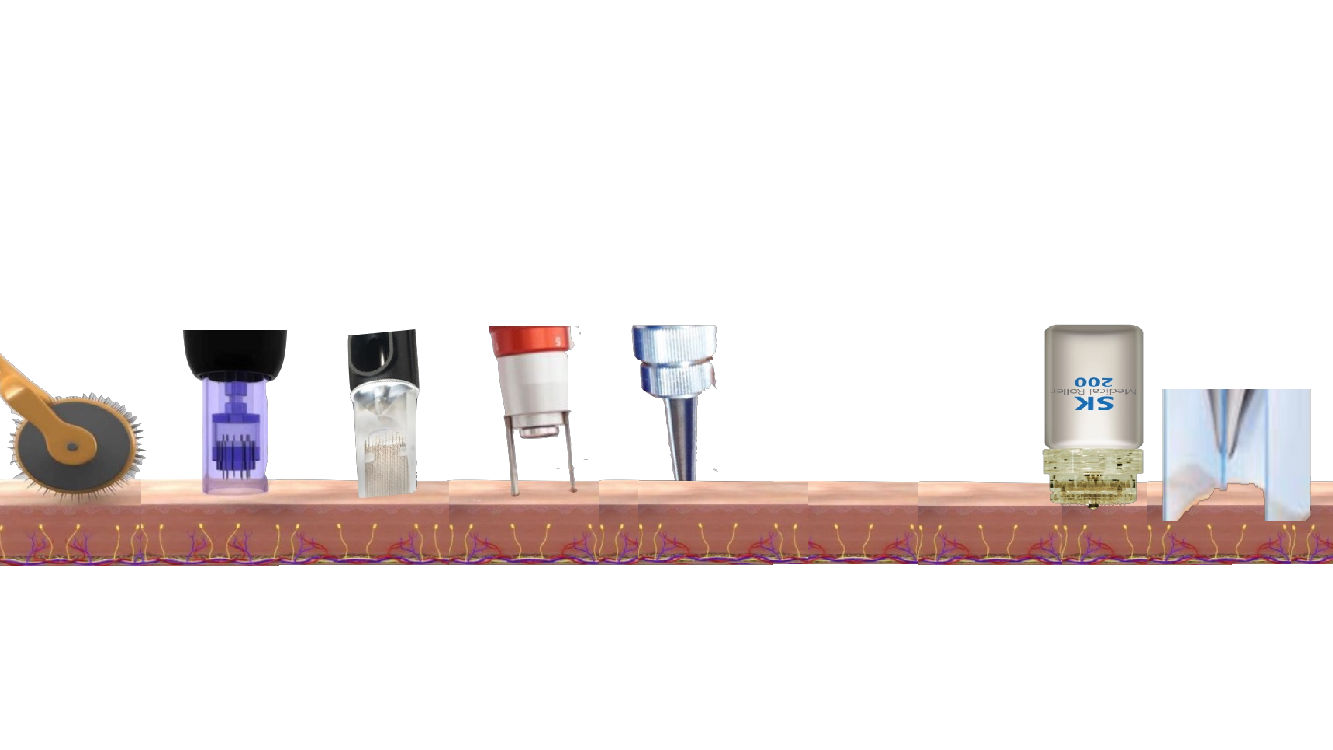
Figura 1: Diferentes mecanismos de drug delivery através da criação de microcanais pela epiderme. Da direita para a esquerda: IPCA®, dermapen, MMP®, laser ablativo e não ablativo, radiofrequência microagulhada, radiofrequência ablativa, Hydra needle e injeção pneumática. Foto: acervo pessoal Dra Luciana Gasques
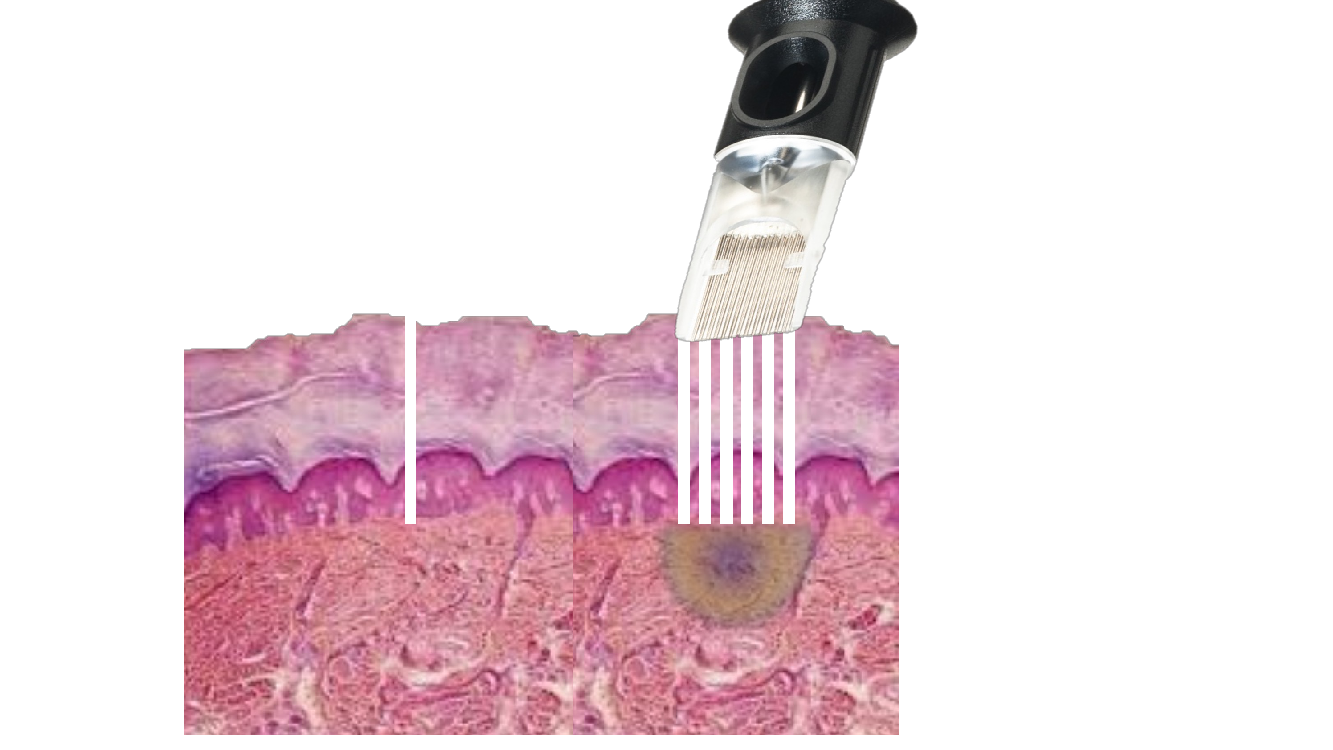
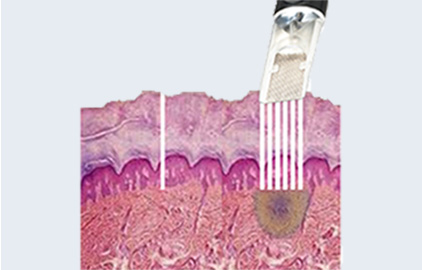
Figura 2: Ilustra a diferença entre injeção (à esquerda) e infusão (à direita). Respectivamente: mesoterapia que é a aplicação do medicamento através de agulha oca acoplada a uma seringa e a MMP® que consiste na criação de microcanais através da epiderme até a derme superficial para penetração do medicamento. Foto: acervo pessoal Dra Luciana Gasques
Edição 26, artigo 2.
English version
Ways to deliver drugs to the skin: adjuvant therapies in hair treatments
Dra. Luciana Gasques
Dermatologist - SBD SBCD CILAD AAD
Hair and nail UMC
Cosmiatry and Laser USP-SP
Home topical and oral therapy are the basis of treatment for scalp disorders. However, some cases have poor response or low adherence. Therefore, adjuvant therapies can be associated, aiming at drug delivery or action on the capillary cycle.
The term Drug delivery covers techniques that increase skin permeation through the horny layer and basal layer (figure 1) allowing the active principle to reach the target structure in the different layers of the skin: epidermis, dermis, and hypodermis, reaching the systemic circulation. Choosing technique should consider the availability, skill of the professional and particularities inherent to each one of them.
From the Greek mesos (medium) and therapeia (to treat with medication), mesotherapy is a medical technique of precise introduction “in bolus” into the skin through numerous microinjections at the site of action (figure 2). It has a low cost, but pain is a limiting factor in long-term treatments. There is no defined protocol for the number of sessions, interval, depth, and amount of medication, as the studies were described in small groups without clear guidelines. The number of sessions can vary from 3 - 20 sessions and the interval between them from once a week to once a month.
Other drug delivery techniques create “microchannels” in the skin, using equipmentwith massive needles or energy (laser). Non-ablative fractional lasers trigger an increase in skin permeability, maintaining the integrity of the stratum corneum through the thermal effect. In addition, some studies demonstrate the conversion of the telogen phase to anagen phase, increasing the duration of the capillary cycle and the growth rate during this phase, preventing its entry into the catagen phase.
André Camirand (1997) developed the roller, circular equipment studded with microneedles that, like the dermapen (similar pen-shaped equipment), produce microchannels in the skin that allow the drug to permeate. In addition to creating microchannels, percutaneous collagen induction with needles (IPCA®) uses the roller for mechanical dermal stimulation, promoting angiogenesis and vasodilation with increased vascularization of the hair follicle. It induces an inflammatory cicatricial response with the production of epidermal (EGF) and platelet (FGF) growth factors that act on the bulge and stimulate the expression of Wnt proteins that act on the papilla. Its use on the scalp must be gentle to avoid retrograde blood flow. Major trauma and more intense treatments are reasonable when the intention is neocollagenesis.
The Hydra needle is a stamp-like device that is filled with the drug of choice with needles that are massive threaded needles that pierce the skin and deliver medication concomitantly. Pneumatic drug infusion is a technology that uses high pressure to overcome corneocyte cohesion.
In Skin Medicine Microinfusion (MMP®), a tattoo machine is used to simultaneously needle and deliver the drug. The drug-soaked needles pierce the skin and actively deliver the substance through shear force between cells.
In all these techniques, the therapeutic effect is determined by both the physical reaction of the mechanical stimulus (puncture effect) and the pharmacological effect of the injected substances. Side effects are rare, depending on the technique and products used.
The medication used must be sterile. While the pharmacokinetics of medications applied by this administration is unknown, the same precautions as for oral use are recommended, therefore, contraindications, laboratory follow-up and restrictions. All medication must be injectable, but not any injectable product can be used in drug
delivery. Ideal features: active at low concentrations, sterile, pH close to physiological, tolerable, biocompatible, resorbable and integrate into the dermis.
It should be noted that these procedures are adjuvant treatments to increase hair growth and improve hair quality in cases that do not respond to conventional therapy and should not be indicated alone for the treatment of alopecia.
Figure 1: Different drug delivery mechanisms through the creation of microchannels through the epidermis. Right to left: IPCA ® , dermapen, MMP ® , ablative and non-ablative laser, microneedle radiofrequency , ablative radiofrequency, Hydra needle and pneumatic injection. Photo: personal collection (Dr. Luciana Gasques)
Figure 2: Illustrates the difference between injection (left) and infusion (right). Respectively: mesotherapy, which is the application of medication through a hollow needle attached to a syringe, and MMP®, which consists of creating microchannels through the epidermis to the superficial dermis for penetration of the medication. Photo: personal collection (Dr. Luciana Gasques)
Issue 26, article 2.

