
Por Dr. Henrique Radwanski
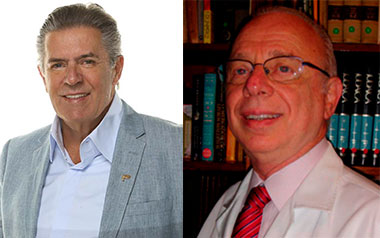
Nesta edição, vou recordar alguns artigos que marcaram a literatura da restauração capilar, dando destaque a dois eminentes colegas brasileiros: Marcelo Gandelman e Carlos Uebel. Reconhecidos por seus pares, estes dois cirurgiões plásticos influenciaram os colegas que se dedicavam ao transplante capilar com suas ideias e técnicas inovadoras. Ambos foram homenageados pela ISHRS, como seu presidente (Gandelman) e como laureado com o prêmio Platinum Follicle Award (Uebel). Temos que lembrar suas importantes contribuições na literatura médica.
Em tempos de Instagram, cada um diz o que bem lhe convém. Nos surpreendemos, quase que diariamente, com posts de fulano que diz que “fez a primeira megassessão em FUE no Brasil”, outro que é “pioneiro em transplante de sobrancelha”, e ainda outros que dizem que estão trazendo para o Brasil “técnicas inovadoras”. Conhecer a história é recordar fatos.
Há exatos 30 anos, Marcelo Gandelman, cirurgião plástico de São Paulo e conhecido pela sua criatividade, apresentava sua experiência no transplante de áreas chamadas “atípicas”. Ou seja: qualquer região anatômica fora do couro cabeludo. No primeiro meeting da ISHRS, em Dallas, 1993, ele apresentou o tema “Hair transplantation in other parts of the body” demonstrando reconstrução de sobrancelhas e de cílios, restauração do bigode em cicatrizes de lábio leporino, e a criação de barba e transplante de pelos no tórax. Subsequentemente, participou de uma série de vídeos publicada pela revista FORUM, produzindo um filme em videocassete sobre transplante de supercílios. Em 1994, Gandelman publicou (também na revista FORUM) o artigo “Eyebrow Transplantation”, em que descrevia a correta inclinação e distribuição dos fios em forma de espinha-de-peixe, desenho esse que é repetido em qualquer aula sobre a restauração dos supercílios. Em seguida, no mais importante livro da cirurgia da restauração de cabelo, Hair Transplantation, editado pelo Prof. Walter Unger, escreveu o capítulo “Eyebrow and eyelash transplantation”.
Carlos Uebel, cirurgião plástico de Porto Alegre e com grande influência da Escola Ivo Pitanguy, publicou, em 1991, na importante revista Annals of Plastic Surgery, sua sistemática em transplante capilar. Com resultados impressionantes para a época, mostrou como era possível fazer uma sessão com mais de 1.000 enxertos, um recorde. Baseando sua metodologia nos trabalhos precursores de Maritt e Nordstöm, e antes da descrição das unidades foliculares, Uebel utilizava os micro-grafts (mais delicados) para construir uma linha frontal natural, e os mini-grafts mais atrás, para dar a densidade necessária. Com sua técnica de hiperinfiltração da área receptora (denominada scalp ballooning), diminuía o sangramento e assim encurtava o tempo de implantação.
Marcelo Gandelman e Carlos Uebel são apenas dois brasileiros que se destacaram na restauração capilar. Mais tarde, outros nomes trouxeram importantes contribuições, seja em artigos ou apresentações: José Cândido Muricy (BHT), Marcelo Pitchon e Ricardo Lemos (fio longo), Mauro Speranzini (DNI, técnica de extração das unidades foliculares), Arthur Tykocinski (Fight the FIGHT), Antônio Ruston (coverage value), Márcio Crisóstomo (técnica combinada), Maria Angélica Muricy Sanseverino (FUE não raspado), Fernando Basto (desenho de linha anterior), Carlos Eduardo Leão (barba, importância da linha temporal), Luciana Takata (reconstrução pós-escalpelamento), Ito Meireles (punching out technique), entre outros. São nomes que a sociedade internacional reconhece como líderes, aqueles que acrescentam importantes ideias e avanços, sempre seguindo os princípios da investigação científica, e publicando em revistas peer reviewed. Em tempos de mídia social, em que novidades acontecem diariamente, e a fama adquirida é efêmera, é fundamental reconhecer o trabalho sério daqueles que tiveram inspiração e – principalmente – transpiração para o avanço da restauração capilar.
English version
Important papers in hair restoration literature, by Marcelo Gandelman and Carlos Uebel
By Dr. Henrique Radwanski
In this edition, some articles that marked hair restoration literature will be recalled, highlighting two eminent Brazilian colleagues: Marcelo Gandelman and Carlos Uebel. These two plastic surgeons are recognized by their peers by influencing colleagues dedicated to hair transplantation with their innovative ideas and techniques. Both have been honored by ISHRS, as its president (Gandelman) and as a Platinum Follicle Award (Uebel). Their important contributions to medical literature might be remembered.
In times of Instagram, everyone says what suits them. Daily, we are surprised by posts from someone who says he “did the first FUE mega-session in Brazil,” another who is a “pioneer in eyebrow transplantation,” and still others who say they are bringing “innovative techniques” to Brazil.” Knowing history is remembering facts.
Exactly 30 years ago, Marcelo Gandelman, a plastic surgeon from São Paulo known for his creativity, presented his experience in transplanting so-called “atypical” areas. In other words: any anatomical region outside the scalp. At the first ISHRS meeting, in Dallas, 1993, Marcelo Gandelman presented the theme “Hair transplantation in other parts of the body” demonstrating reconstruction of eyebrows and eyelashes, restoration of the moustache in cleft lip scars, and the creation of a beard and chest hair transplant. Subsequently, he participated in a series of videos published by FORUM magazine, producing a videocassette film about eyebrow transplantation. In 1994, Gandelman also published in FORUM magazine the article “Eyebrow Transplantation”, in which he described the correct inclination and distribution of hairs in the shape of a herringbone, a design that is repeated in any class on eyebrow restoration. Then, in the most important book on hair restoration surgery, Hair Transplantation, edited by Prof. Walter Unger, wrote the chapter “Eyebrow and eyelash transplantation.”
In 1999, Carlos Uebel, a plastic surgeon from Porto Alegre and with major influence from the Ivo Pitanguy School, published his systematic approach to hair transplantation in the important journal Annals of Plastic Surgery. With impressive results for the time, he showed how it was possible to carry out a session with more than 1,000 grafts, a record. Basing his methodology on the precursor work of Maritt and Nordstöm, and before the description of follicular units, Uebel used micro-grafts (that are more delicate) to build a natural frontal line, and mini grafts further back, to give the necessary density. With its technique of hyperinfiltration of the recipient area (called scalp ballooning), it reduced bleeding and thus shortened the implantation time.
Marcelo Gandelman and Carlos Uebel are two Brazilians who stood out in hair restoration. Later, other names made important contributions, whether in articles or presentations: José Cândido Muricy (BHT), Marcelo Pitchon and Ricardo Lemos (long thread), Mauro Speranzini (DNI, follicular unit extraction technique), Arthur Tykocinski (Fight the FIGHT), Antônio Ruston (coverage value), Márcio Crisóstomo (combined technique ), Maria Angélica Muricy Sanseverino (unshaved FUE), Fernando Basto (foreline drawing), Carlos Eduardo Leão (beard, importance of the timeline), Luciana Takata (post-scalping reconstruction), Ito Meireles (punching out technique), and others. These are naming that international society recognizes as leaders, those who add important ideas and advances, always following the principles of scientific research, and publishing in peer reviewed journals. In times of social media, where news happens daily, and acquired fame is ephemeral, it is essential to recognize the serious work of those who had inspiration and perspiration for the advancement of hair restoration.

